SENUA'S SAGA: HELLBLADE II
Level Design - Ninja Theory
Intent on saving those who have fallen victim to the horrors of tyranny, Senua faces a battle of overcoming the darkness within and without.
Chapter 2 - Freyslaug
Level Design - Ninja Theory
Responsible for settlement layout and gameplay, intro leading to settlement & final section leaving the Drauga Arena.

Ch2 Void Ideas
Gameplay Exploration
As the first iteration of the settlement layout took shape, I continued to develop the narrative surrounding the area. One of the key story beats defined early on was that Senua would draw parallels between the destruction of this settlement and the attack on her own village by the Northmen. As she moves through the ruins, these intrusive memories would gradually intensify, blurring the line between her past and the present.
Using this narrative direction, I explored gameplay concepts that could reinforce Senua's emotional experience to the player and strengthen the connection through player interaction. At Ninja Theory we worked closely with Professor Paul Fletcher as well as individuals with lived experience of psychosis. Drawing from talks and case studies provided by Professor Paul Fletcher, I explored ideas around pattern recognition and how people create internal models of the world through lived experiences.
Early ideas included:
- A transition into a mystical "OtherWorld" that reflected Senua's altered perception.
- "Void"-based gameplay sequences where she becomes fixated on objects and finds patterns in the ordinary as the world around her falls away.
- An alignment puzzle that tied environmental interaction to narrative progression as things in the settlement cause her to re-live her past experiences.
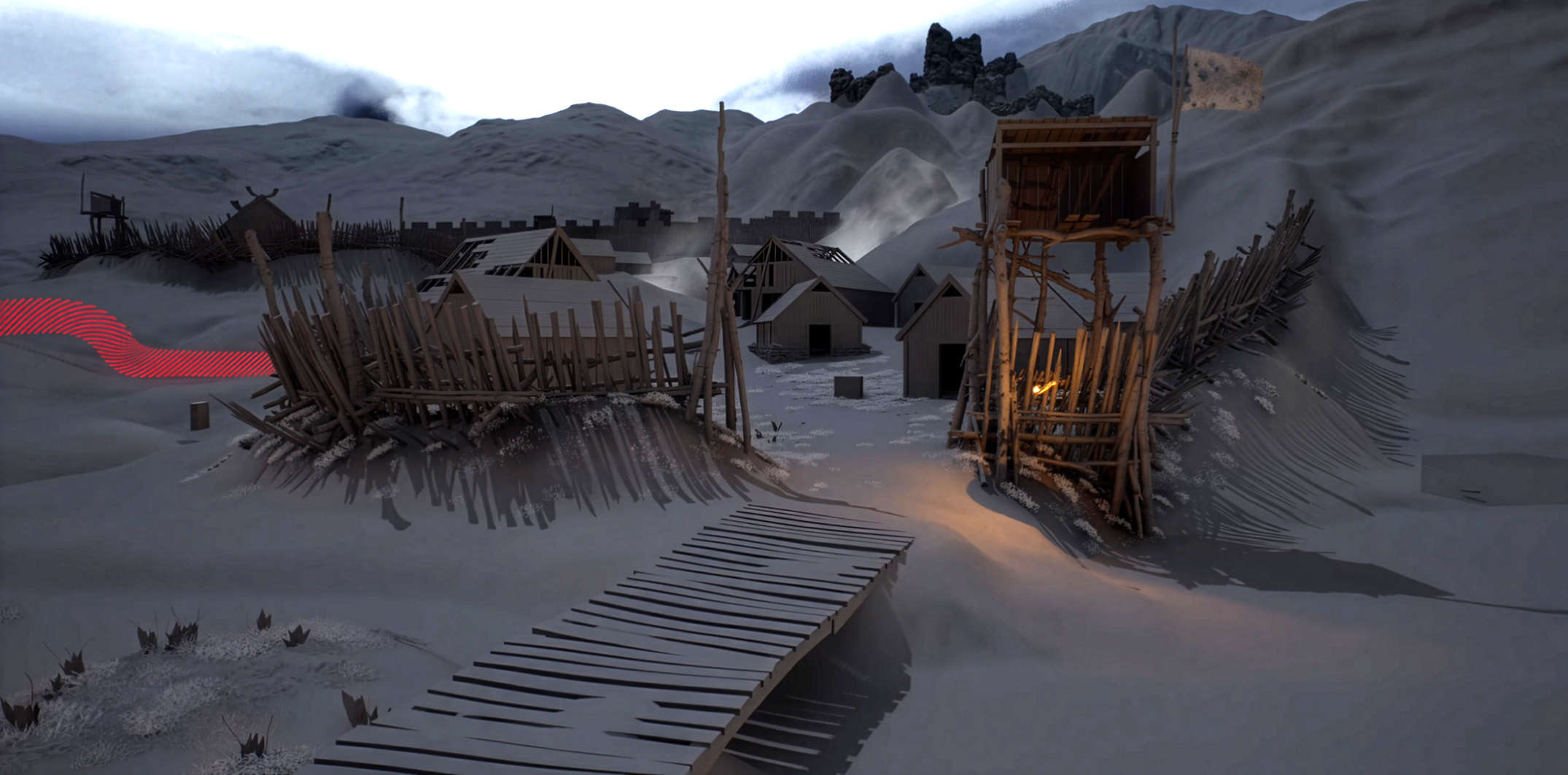
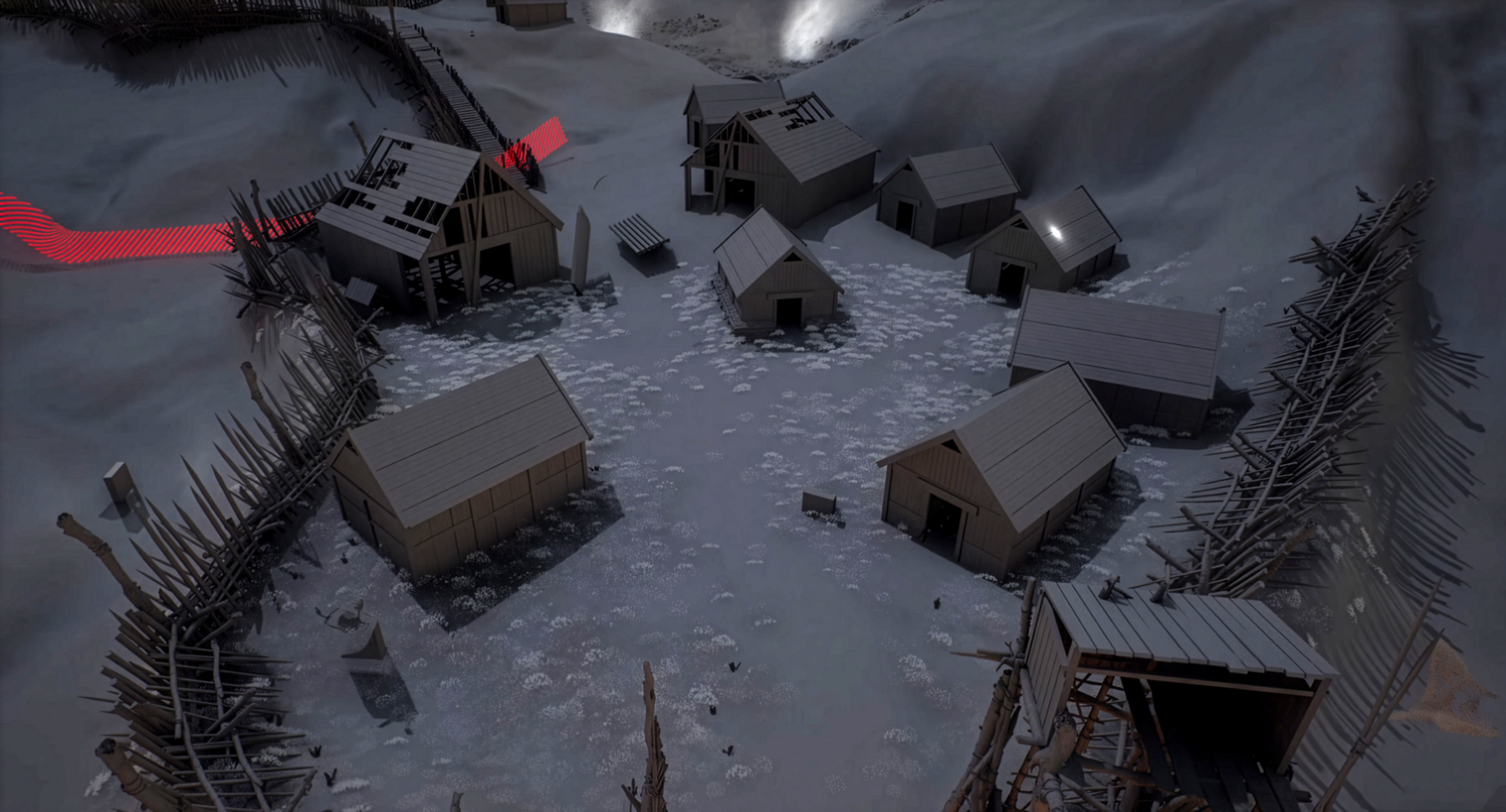
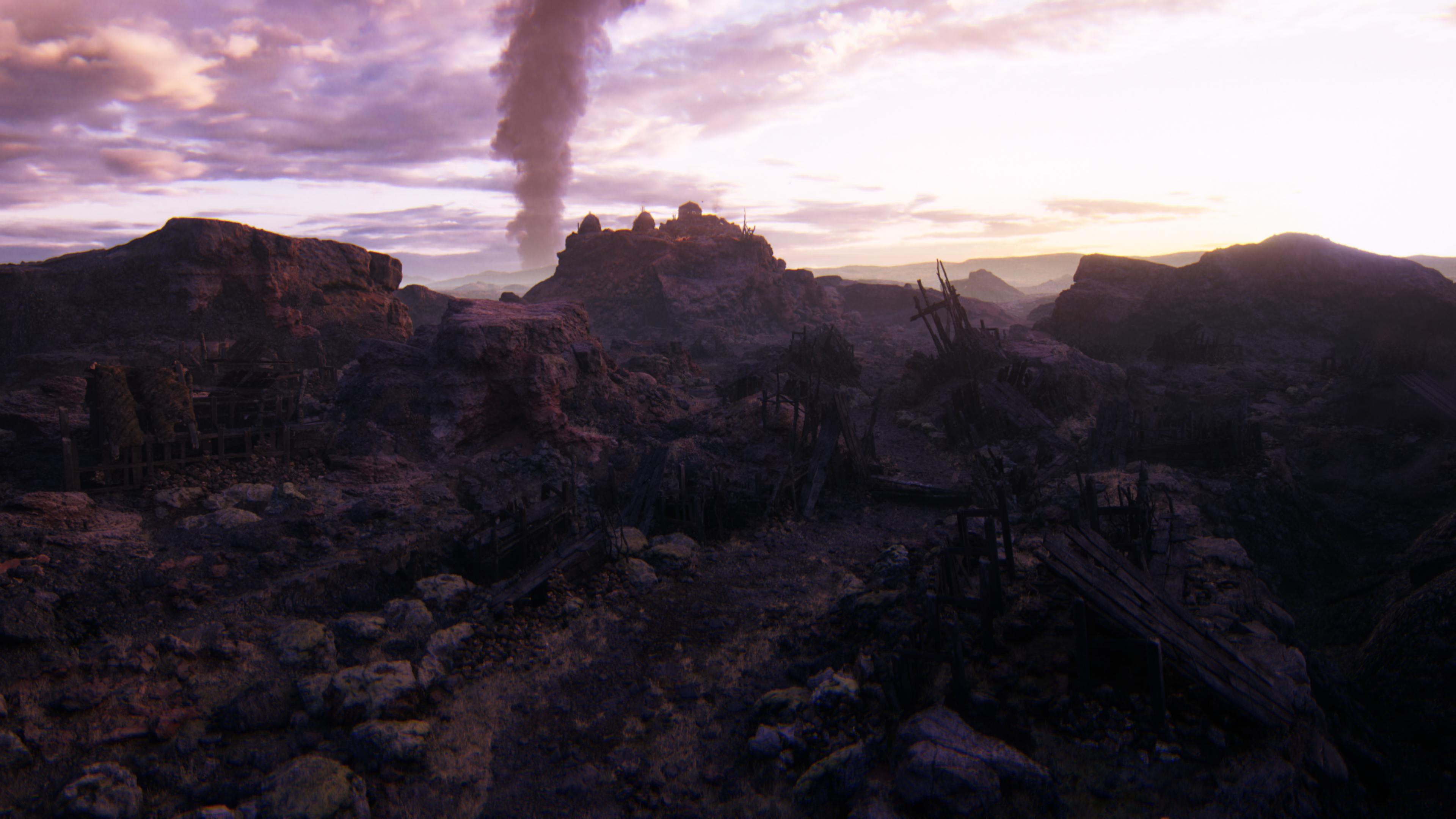
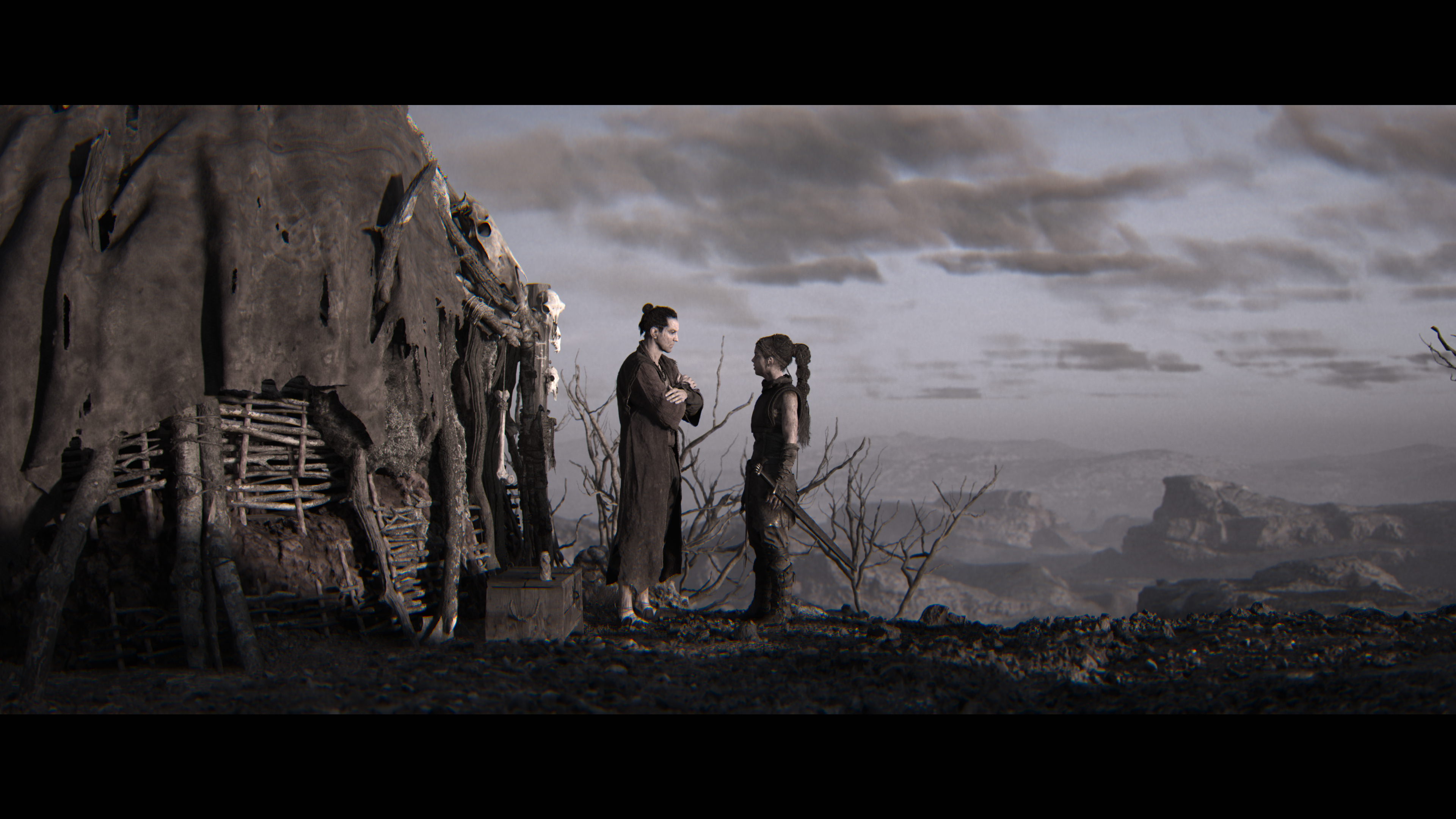
After successfully capturing the slave master (Thórgestr) at the end of Chapter 1, Senua orders him to taker her to their settlement in order to full-fill her objective of stopping the Slavers and freeing her people. As they arrive they realise that the settlement has fallen to the Draugr, prompting Senua to investigate the scene in search of survivors.
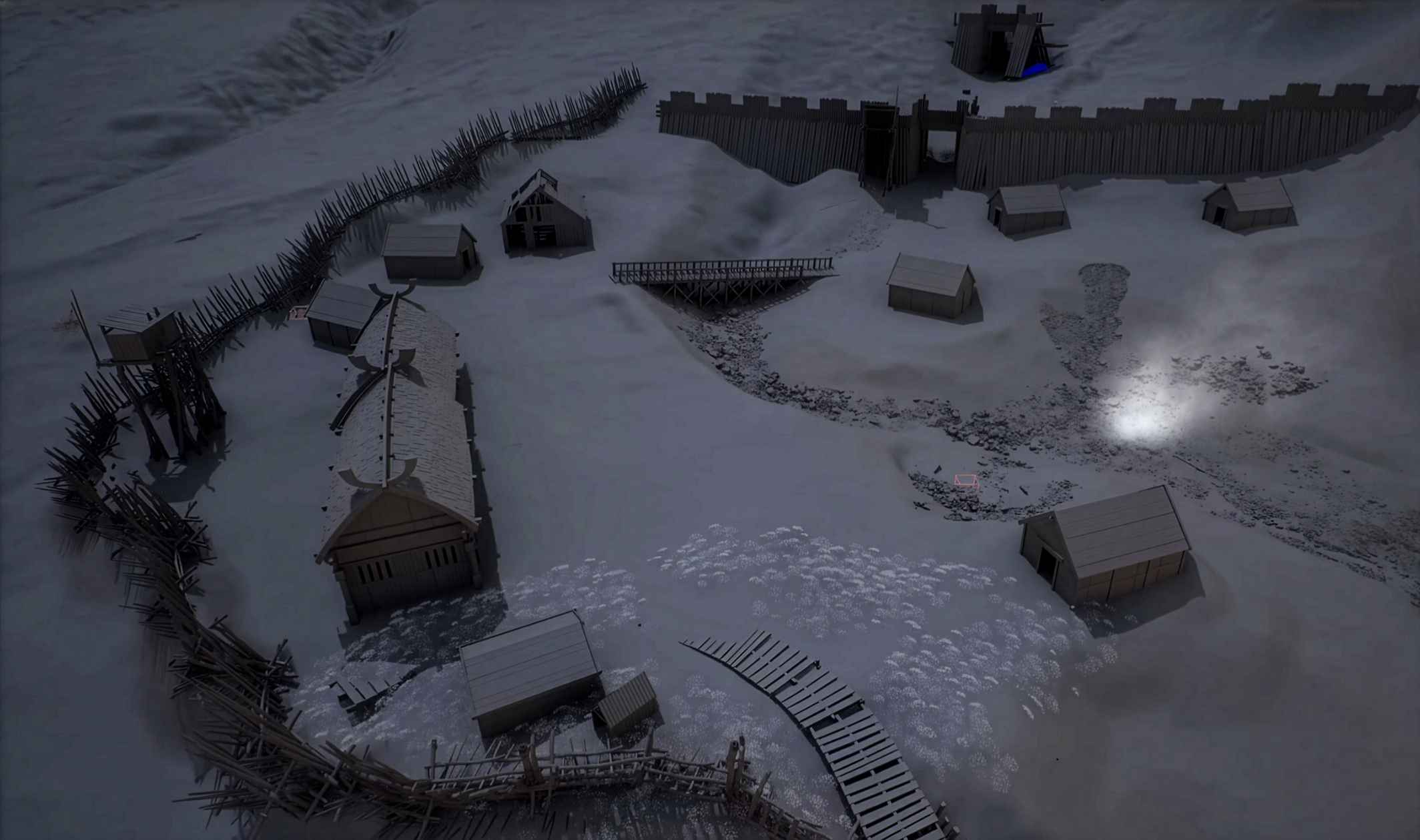
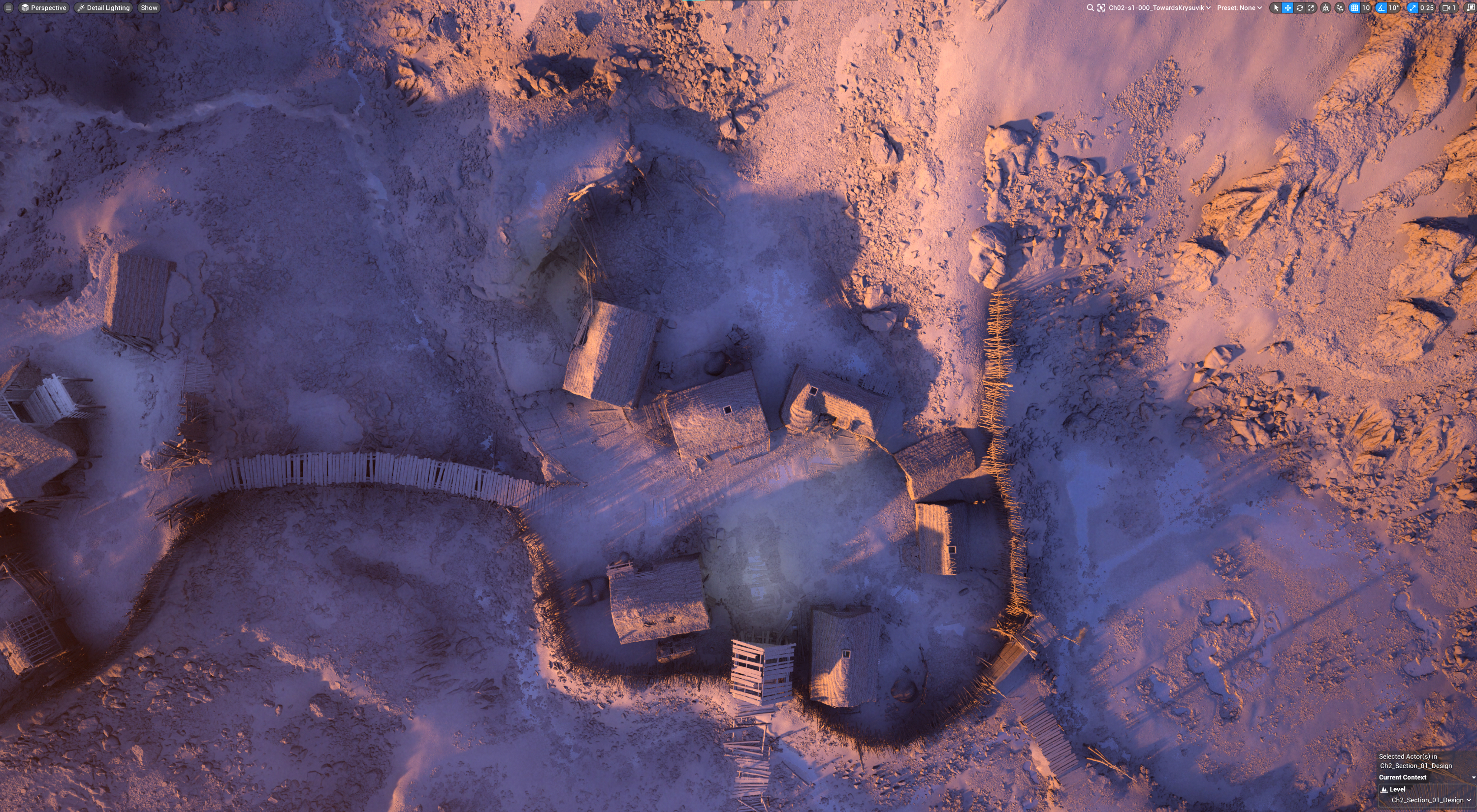
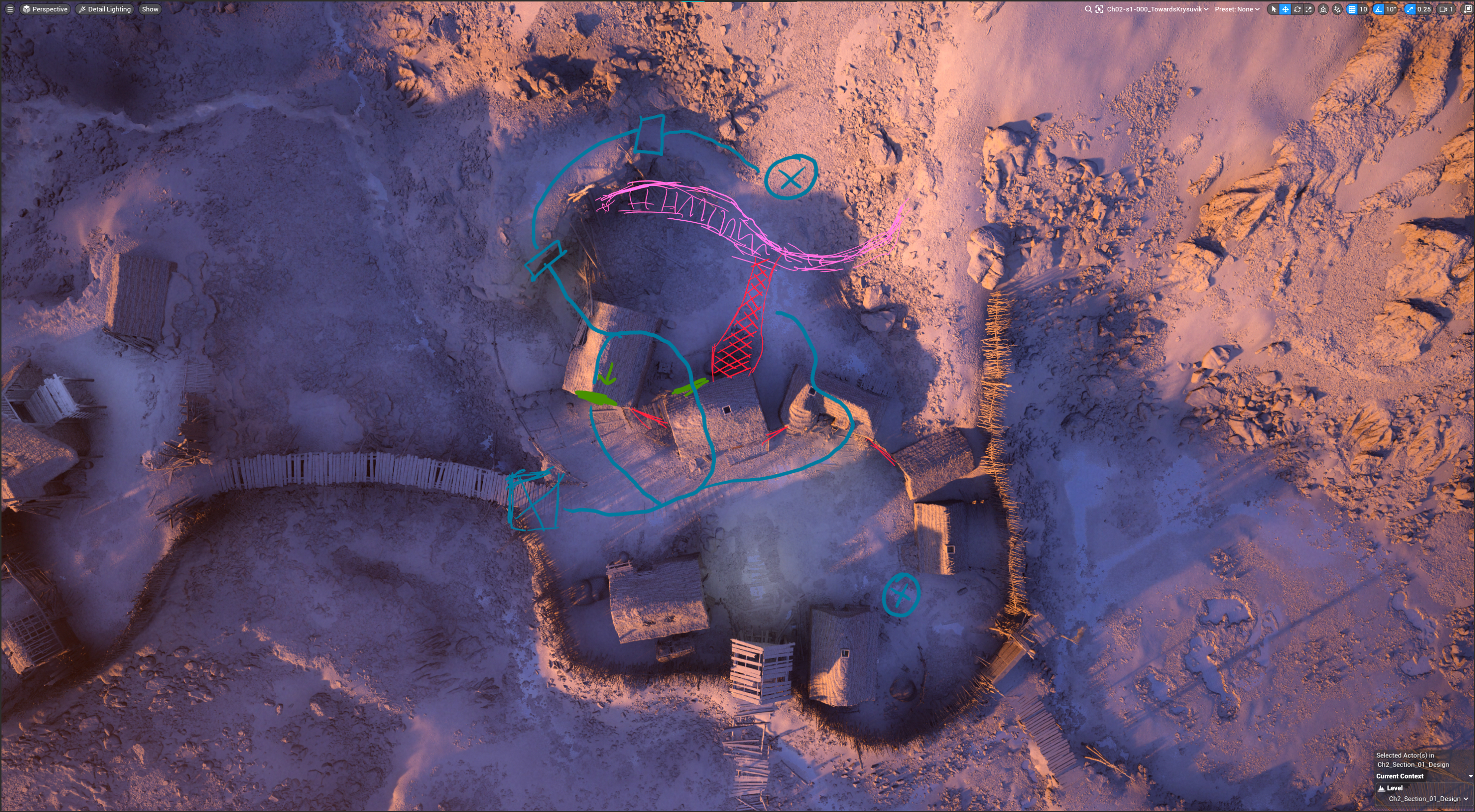
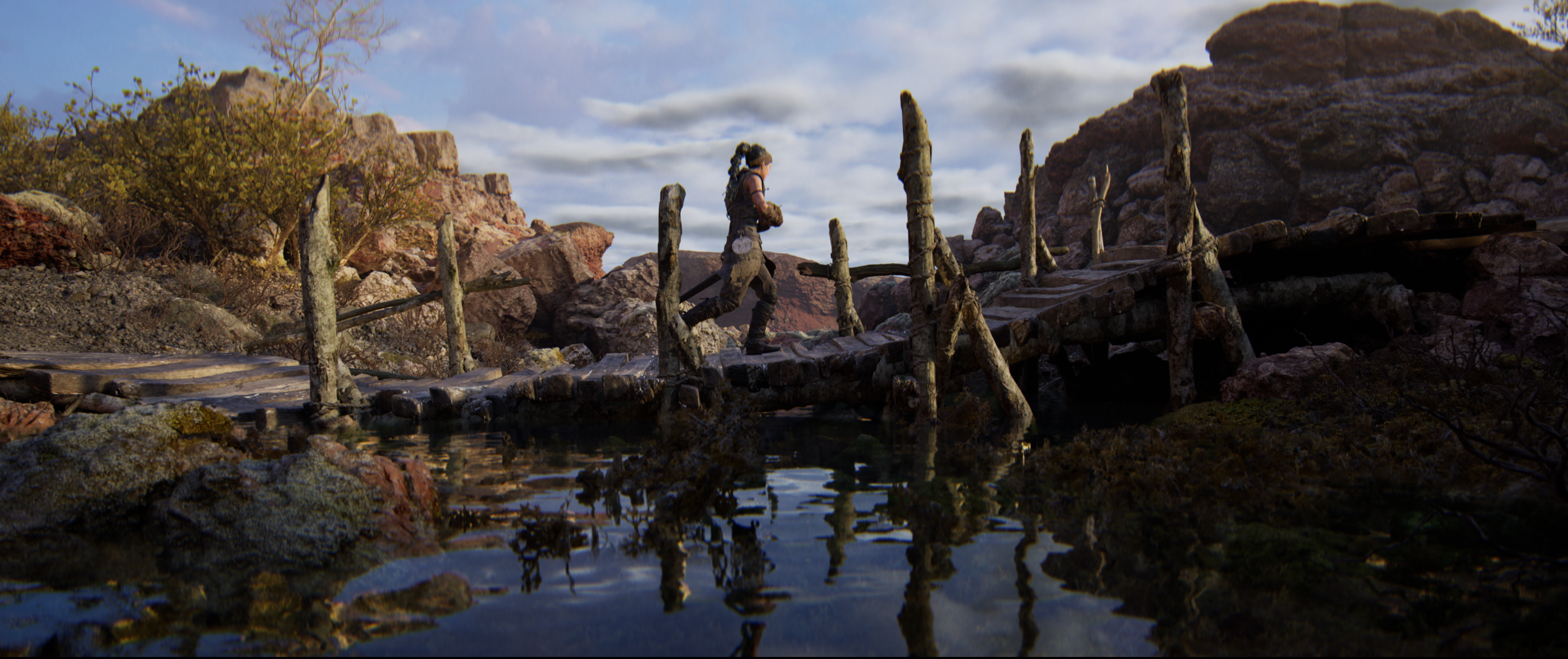
Almost all levels in Senua's Saga: Hellblade II are based on real-world locations across Iceland. I was initially provided with the desired location which was a beautiful geothermal site on the Reykjanes Peninsula named Gunnuhver. Taking this and early scripts I started planning out the mission flow. Using the existing location reference and scan data as the foundation for the level, I started to plot out key narrative beats, approximate timings for narrative moments, potential cut-scene locations and gameplay spaces.
With this high-level context established, I started defining how the settlement functioned before the attack. Understanding its original purpose provided a strong foundation for the layout, allowing me to easily layer the events of the attack in a believable way. This grounded approach to world-building allowed me to create an environment that naturally tells the story / history of the location.


Initial Layout
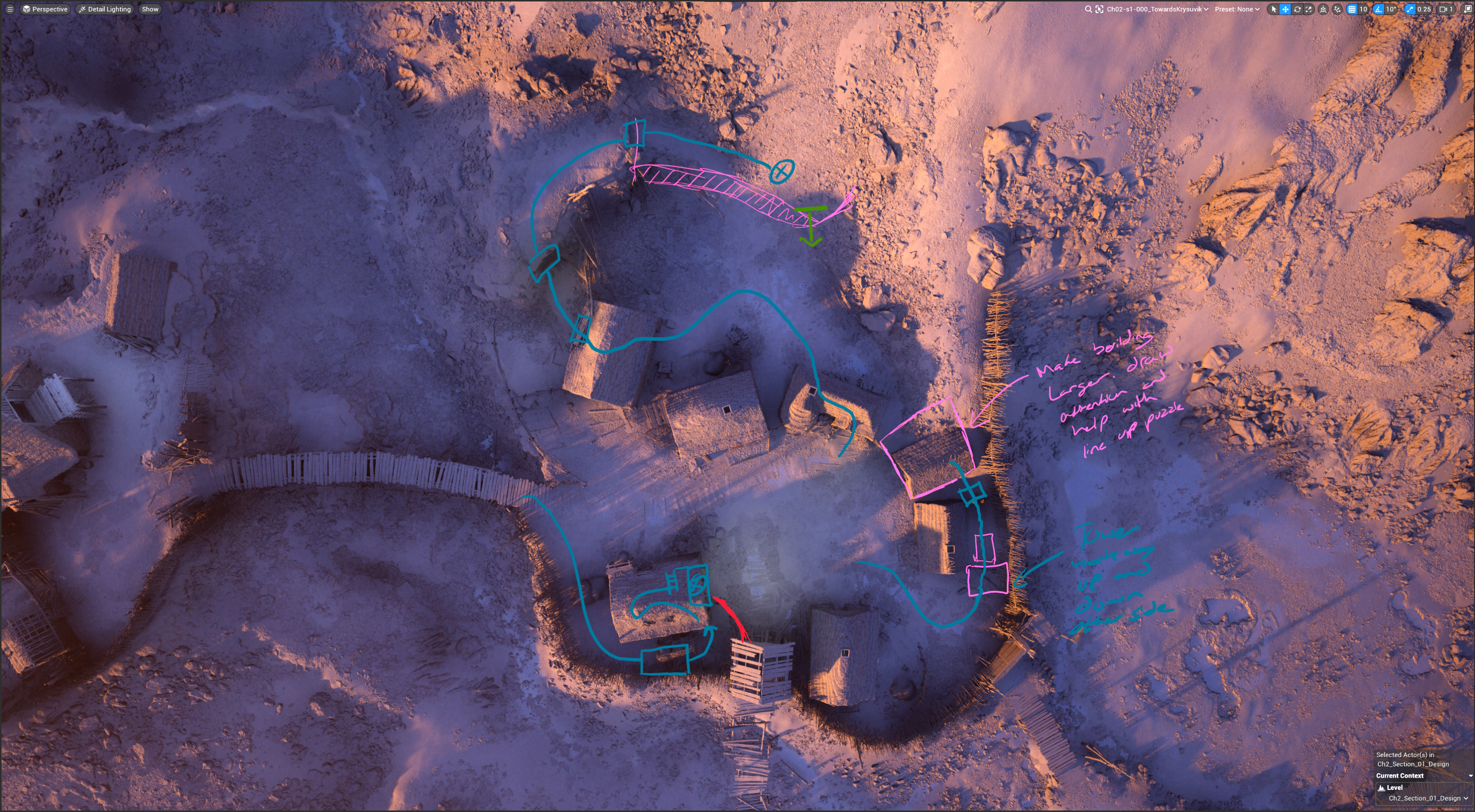
Final Layout & Gameplay
After multiple iterations and collated feedback I found that the early prototypes were too forceful with trying to present the idea of Senua's past experience's bleeding into her perception of the world. Players couldn't establish an understanding of what was the settlement vs Senua's perception. Although this was an intended response, it lead more to player confusion than a uneasy uncertainty. As a result I decided to strip back the gameplay elements in favour of a slower narrative build up. Allowing players to freely explore and build a mental map of the settlement before then bringing in Senua's lived experiences / intrusive memories. Reinstating the Rune puzzles form Hellblade 1 felt fitting as they naturally encourage exploration around the space, ensuring players became familiar with the settlement before it is changed.

CH2 Final Cut
Chapter 3 - Rauðhólar
Level Design - Ninja Theory
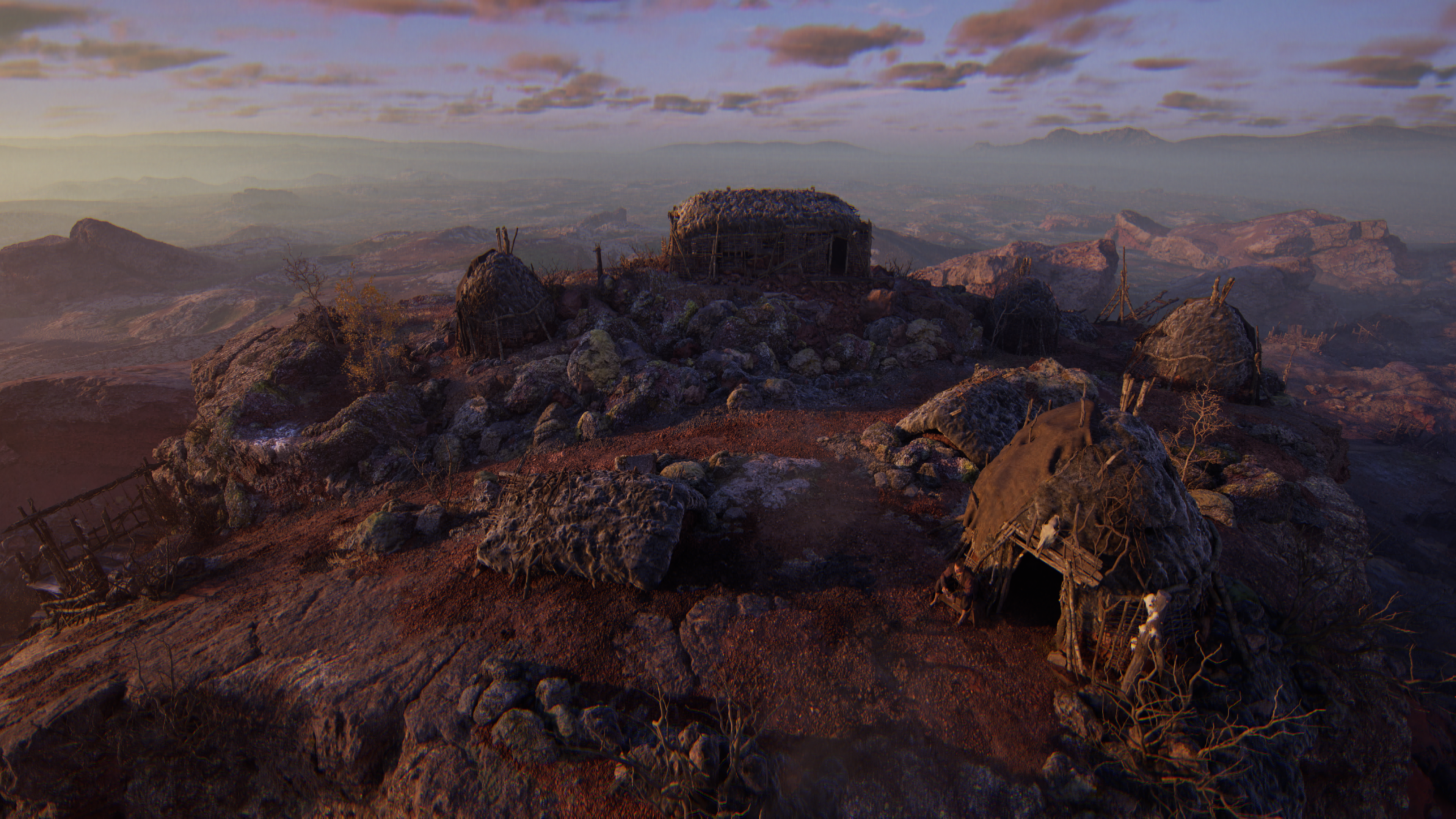
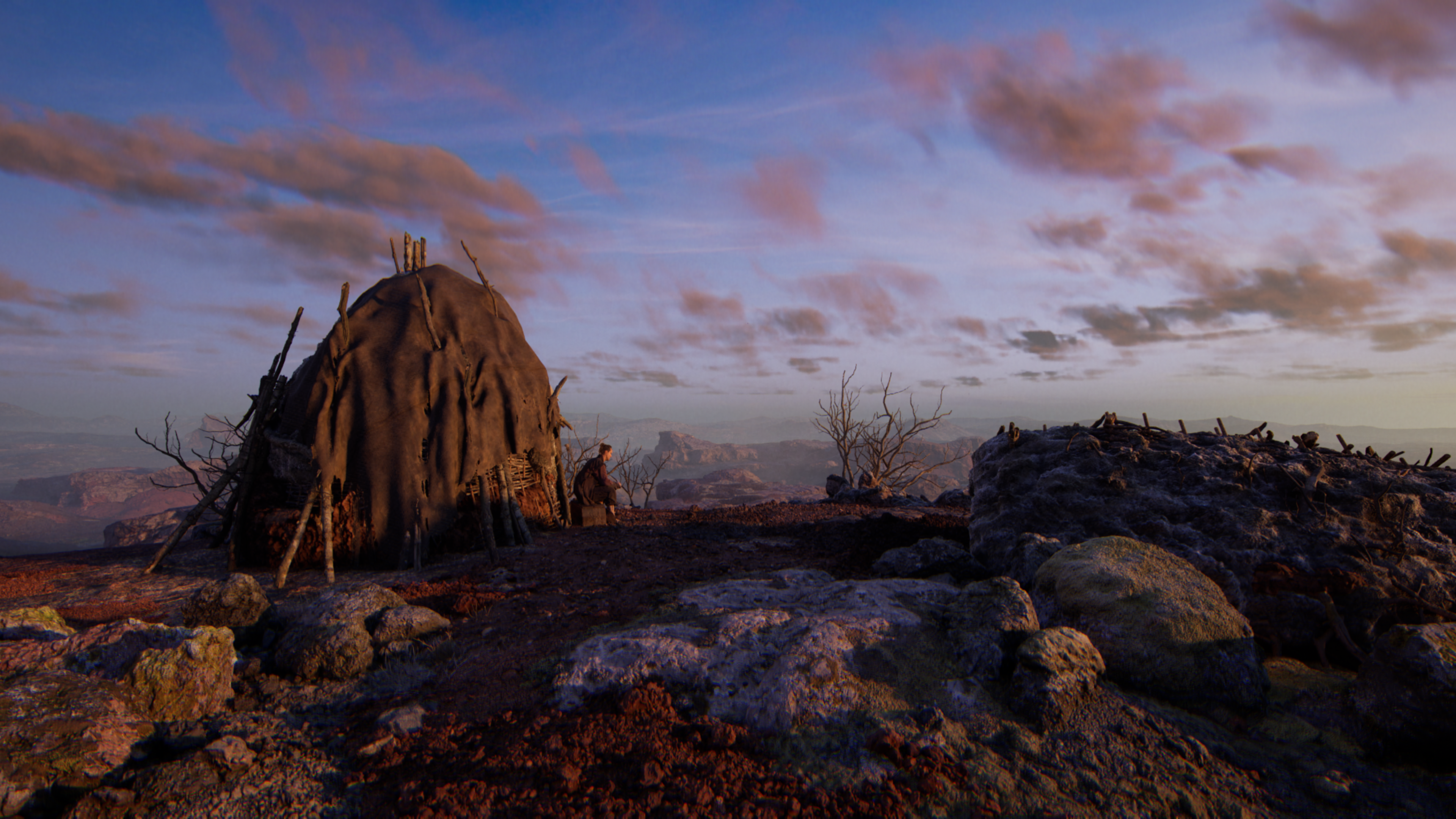
Responsible for Illtauga chase sequence, intro leading to the chase & the hilltop settlement layout.

Ch3 Blockout & Final
Event Refinements &
Collaboration
After several iterations, I finalised the key gameplay events and defined the structure and pacing of the chase. I worked closely with the Art, VFX, and Audio teams to bring the set-piece to life, continuously refining the timings and presentation of events to maintain the sense of an ever-present threat.
As I was iterating on the section I ended up removing most of the traversal objects that were present in the original version. I found that these were adding too much frustration for players and the animations we had felt too slow, breaking the immersion of the chase.
Alongside the set-piece design, I replaced the initial prototype implementation with a more robust sequencer framework. I consolidated the fail state, events and checkpoint logic into a single Blueprint Actor, making the chase easier to iterate and maintain throughout development. This actor was then driven by a Level Sequencer, allowing me to fine-tune events and scale the difficulty based on player skill level. The goal was for players to feel as though they barely escaped Illtauga. Using a "rubber banding" style set up allowed me to sustain a constant sense of urgency from beginning to end without punishing the player for small mistakes.
Using a single Level Sequencer to drive all the logic also greatly benefited VFX and Audio as they could also fine-tune their visuals and music, greatly amplifying the overall experience.
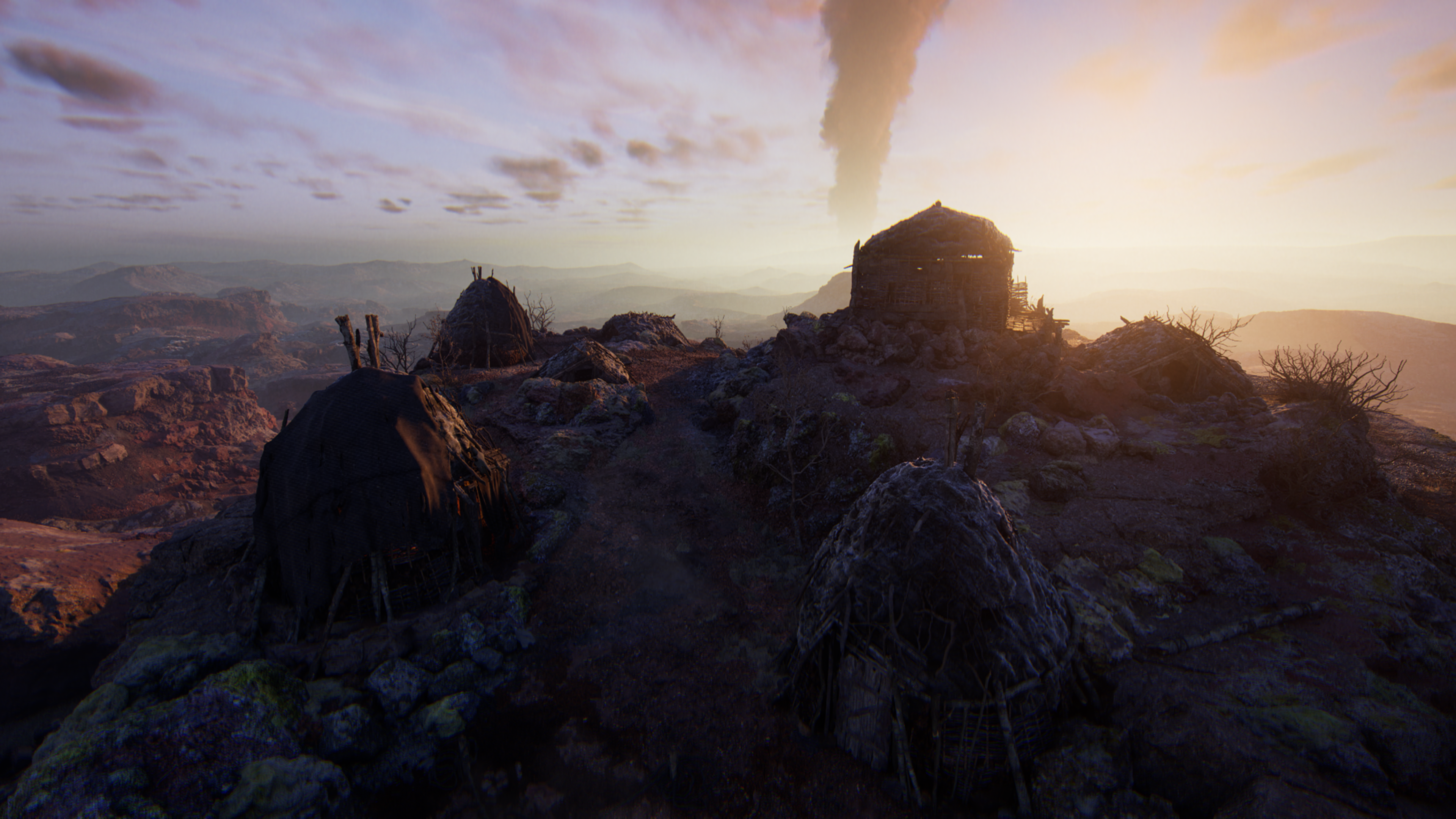
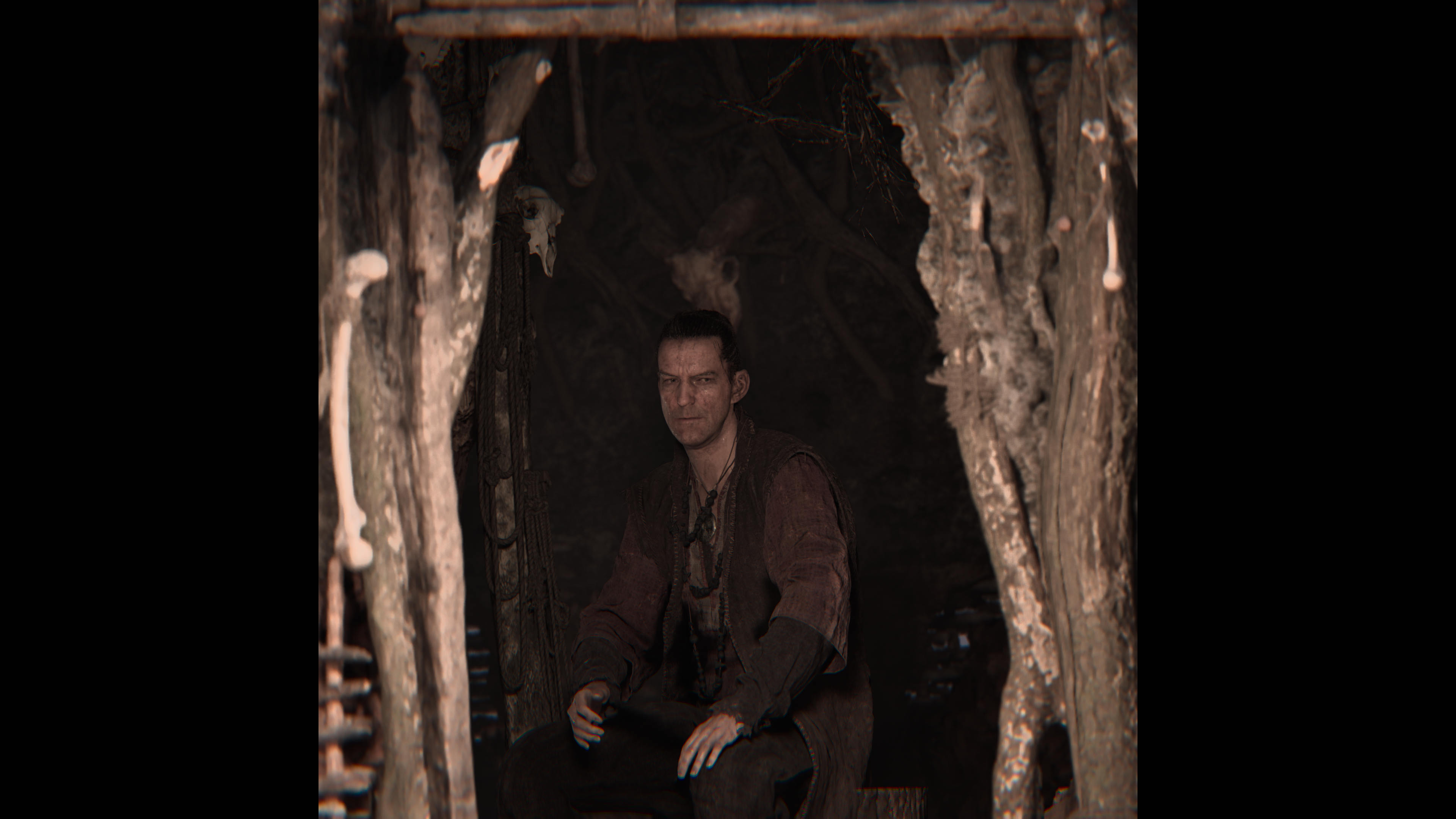
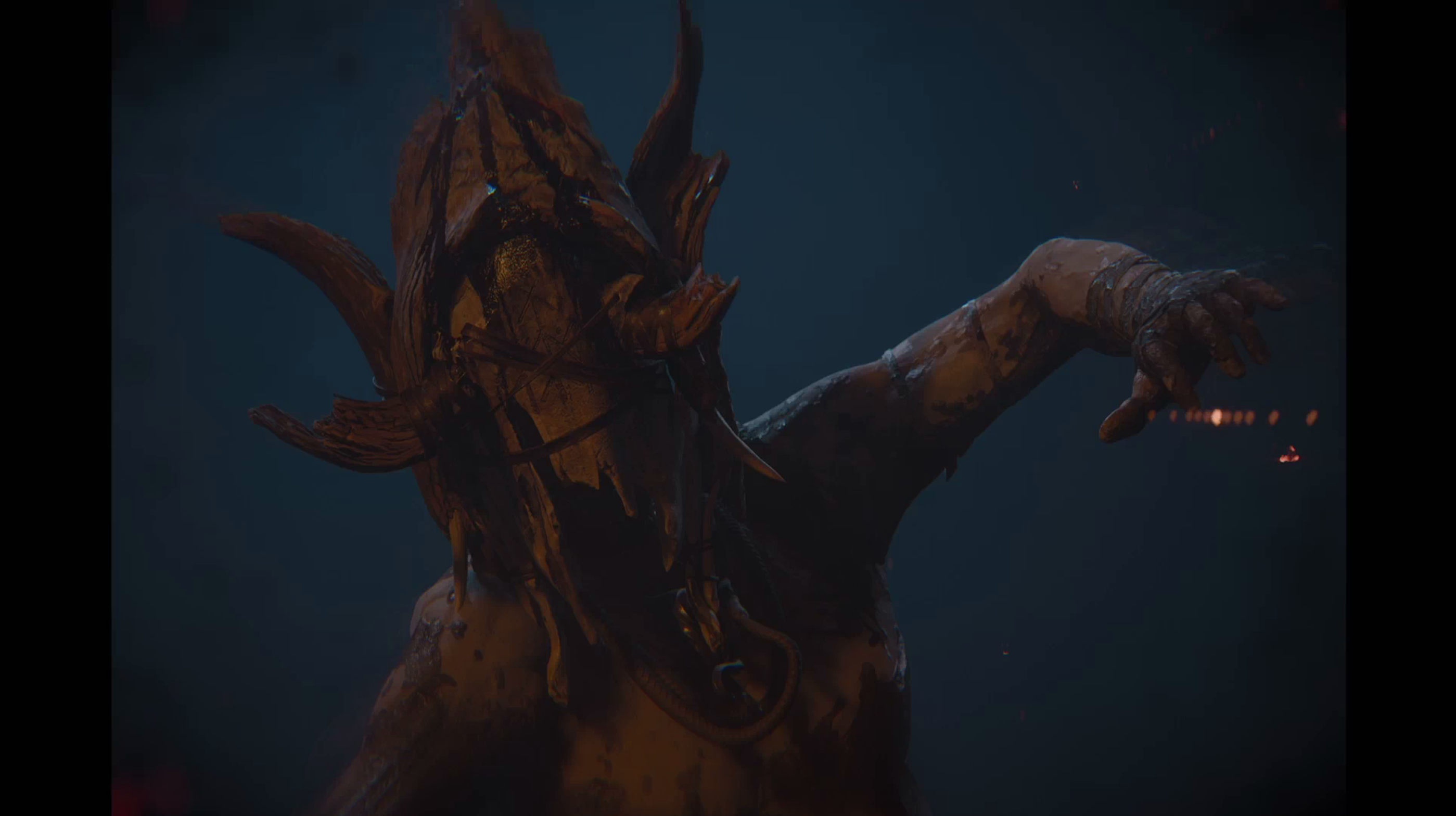
After freeing Fargrímr from the Draugr ritual in Ch2, Fargrímr explains the Draugr were calling to a giant named Illtauga and offers Senua temporary safety at his encampment. Senua, Fargrímr and Thórgestr arrive at the red hills starting Ch3.
Towards the end of development, I transitioned on to Chapter 3 – Illtauga Chase. This section had already gone through several iterations by different designers, but the gameplay direction was still unresolved.
The original brief was centered around a "floor is lava" style gameplay, with the player navigating to the safety of a hilltop encampment while avoiding Illtauga's attacks. This had a mix of high intensity chase moments interspersed with tense "stealth" sections. After reviewing the existing work, I proposed rebuilding the section. Drawing on the strongest elements of previous iterations, I shifted the focus toward a cinematic, set-piece chase that emphasised pacing, spectacle, and player urgency.
I began by identifying a series of key gameplay and environmental events, before creating a whitebox version of the sequence. This event-driven approach allowed me to fine tune the rhythm of the chase, balancing moments of tension and traversal to create a memorable gameplay section.
Set Piece Reset


Chapter 4 - Huldufólk
Level Design - Ninja Theory
Responsible for initial cave blockout, Sacrifice Trial & leaving the cave with Fargrim.

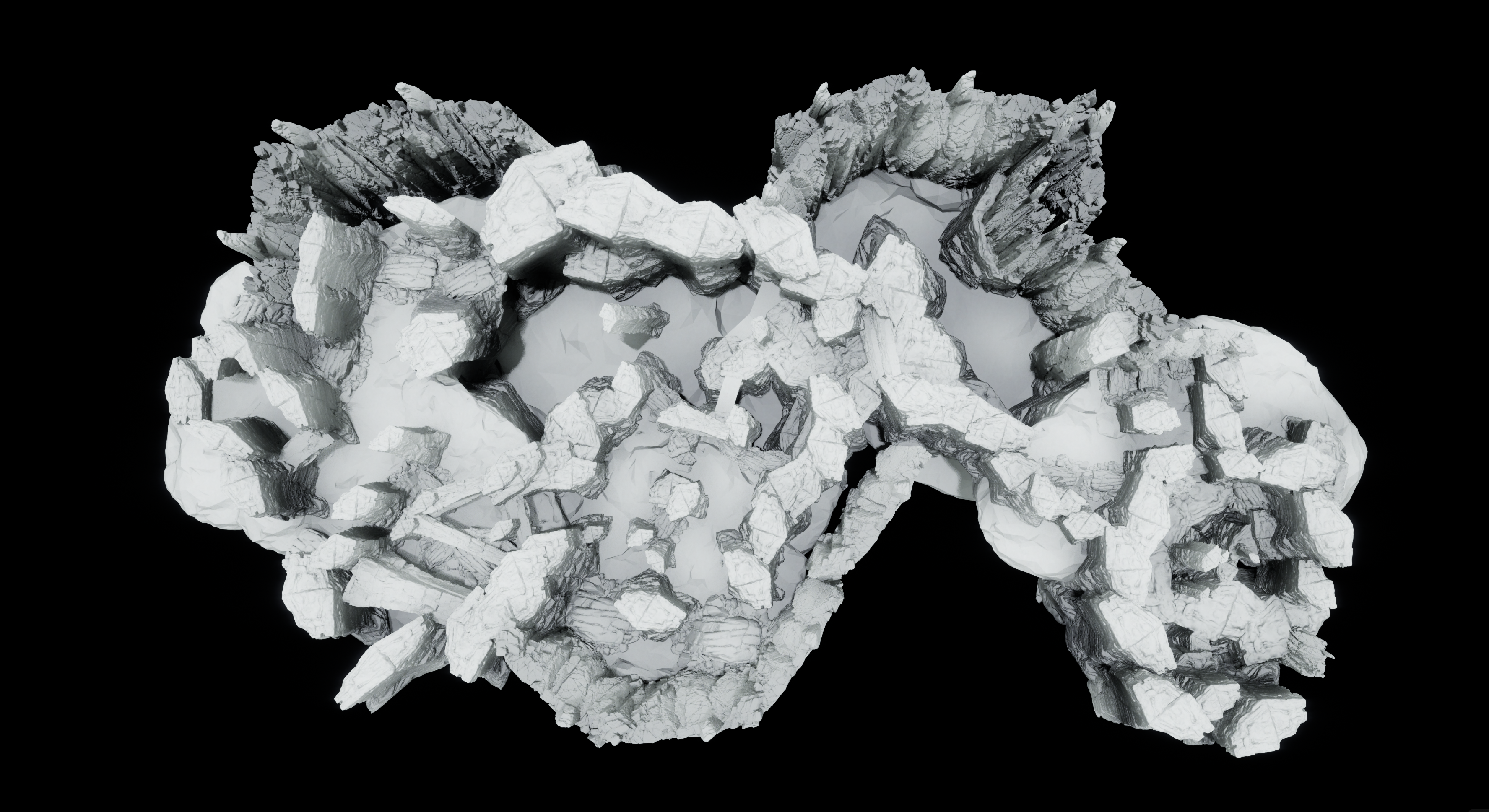
Initial Cave Blockout
Stealth Pivot
After my initial whitebox the scope of the cave section expanded greatly. As a result the Chapter 4 cave responsibility was split between myself and Expert Designer Gerald Poon. I focused primarily on the Sacrifice Trial section, helping to shape its pacing, tension, and moment-to-moment player experience within the broader mission.
As the narrative around the Hidden Folk evolved, I started exploring ways that we can tie the Hidden Folk narrative to Illtauga's story. There was opportunity to mirror some of the themes around Illtauga that are later revealed to Senua. Exploring these themes around sacrifice with directors we landed on a story beat where Senua would sacrifice her weapon. With this strong narrative arc defined, I began exploring stealth-based gameplay to prove out the experience without her sword. Unfortunately due to resource constraints, this stealth direction evolved into a more experiential “ghost train” style sequence rather than systemic stealth gameplay.
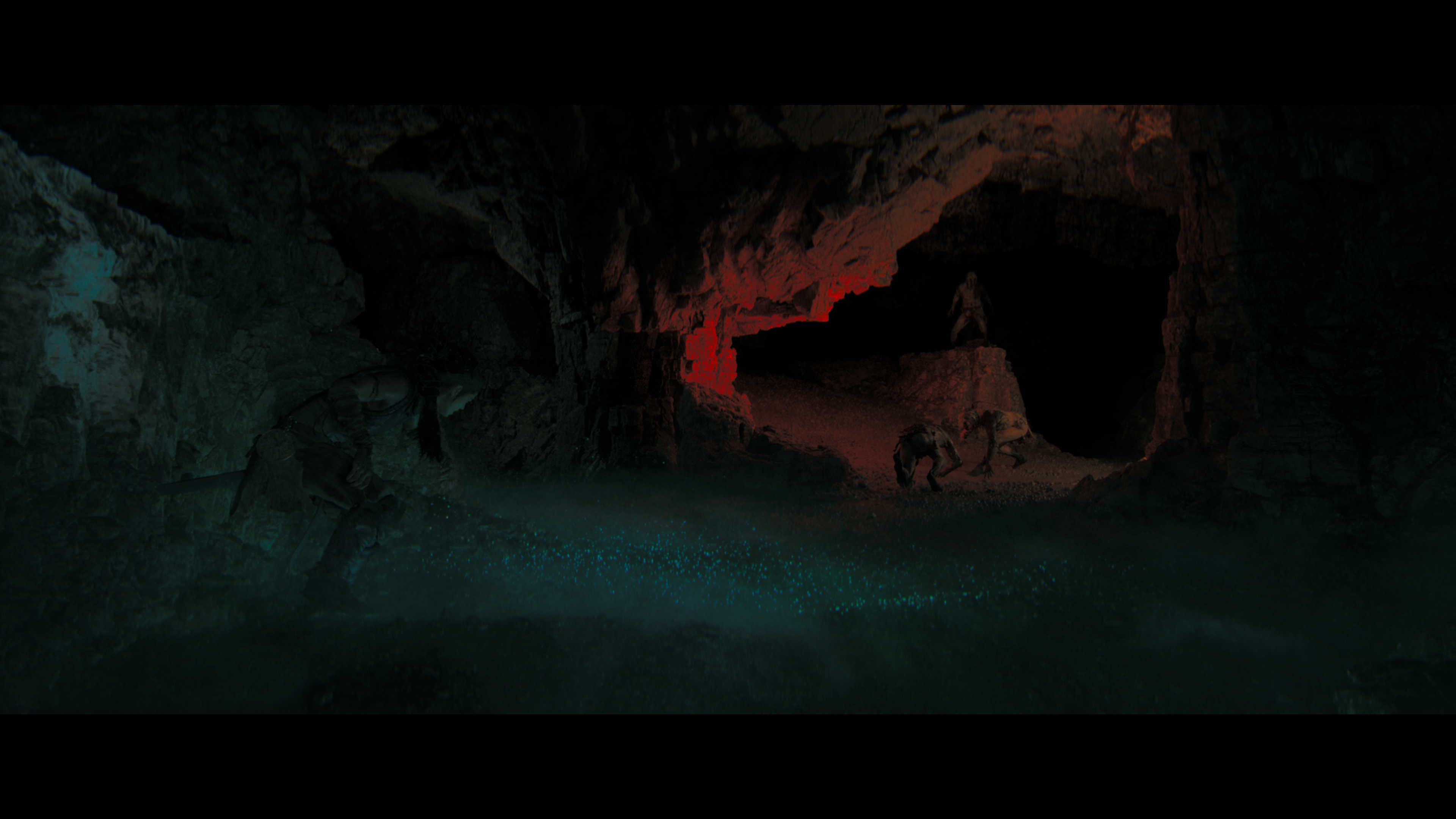
To build up to this narrative beat it was important to make the caves feel dangerous helping this sacrifice carry more weight. As players get deeper into the cave, the Cave Draugr is introduced, a fast and twitchy variant of the Draugrs. Establishing the Cave Draugr and giving the player multiple fights before hand allowed me to build up the players reliance of using the weapon to survive the caves before it is taken away. This created a much stronger contrast and instantly made the following section more tense.
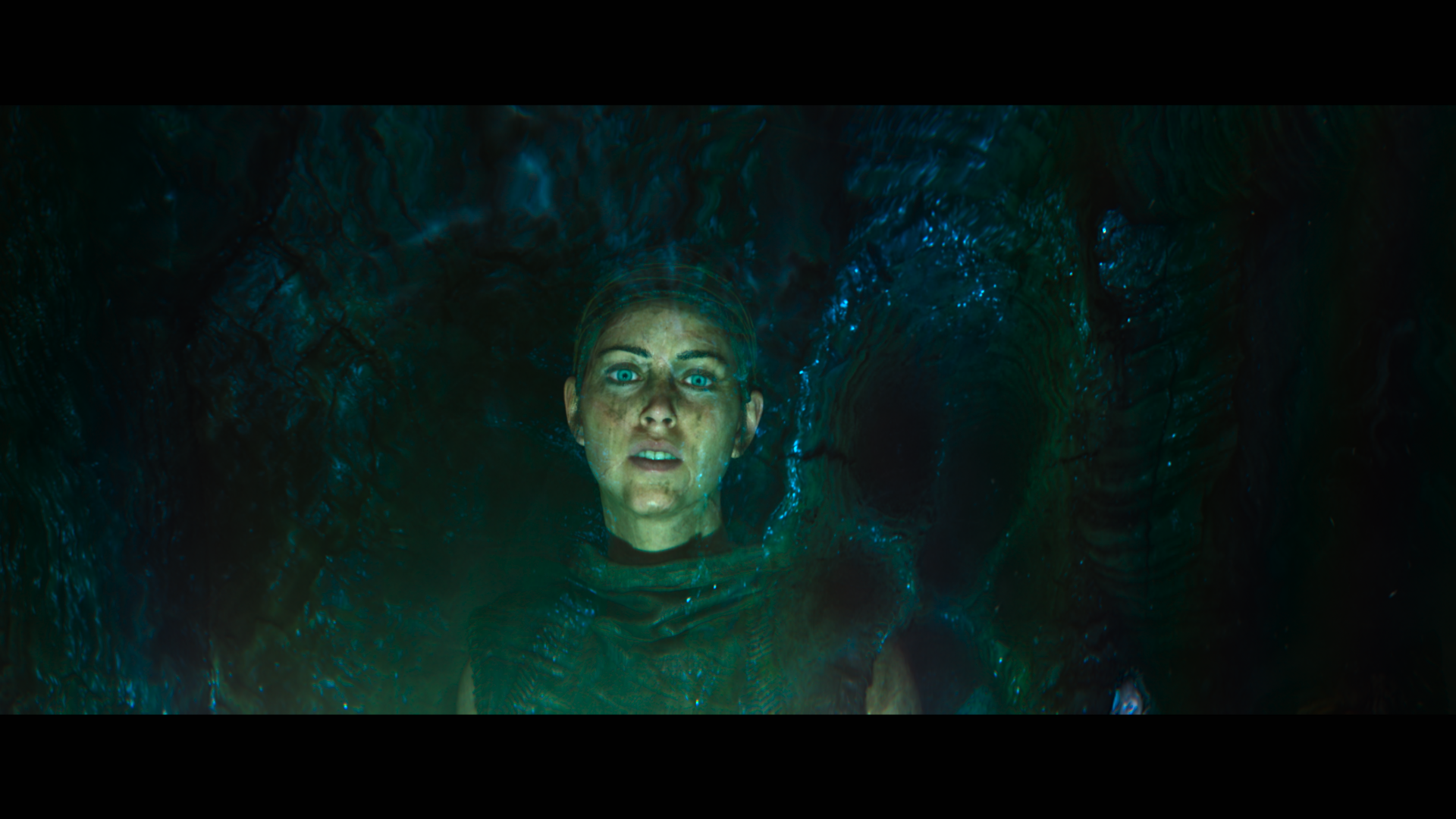
Unsure how she can kill the giant Illtauga, Senua searches for the Hidden Folk in hopes to gain their favour.
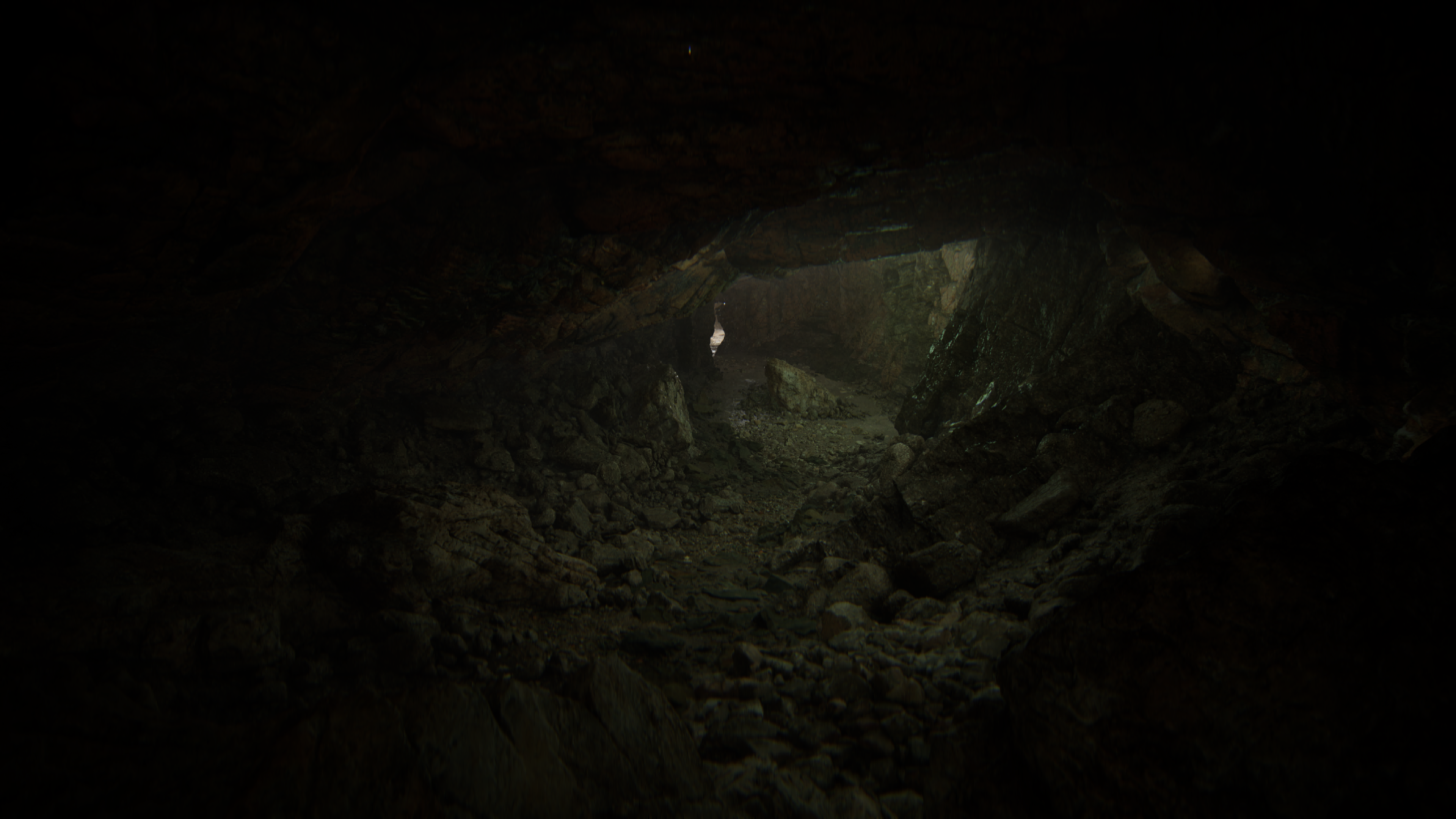
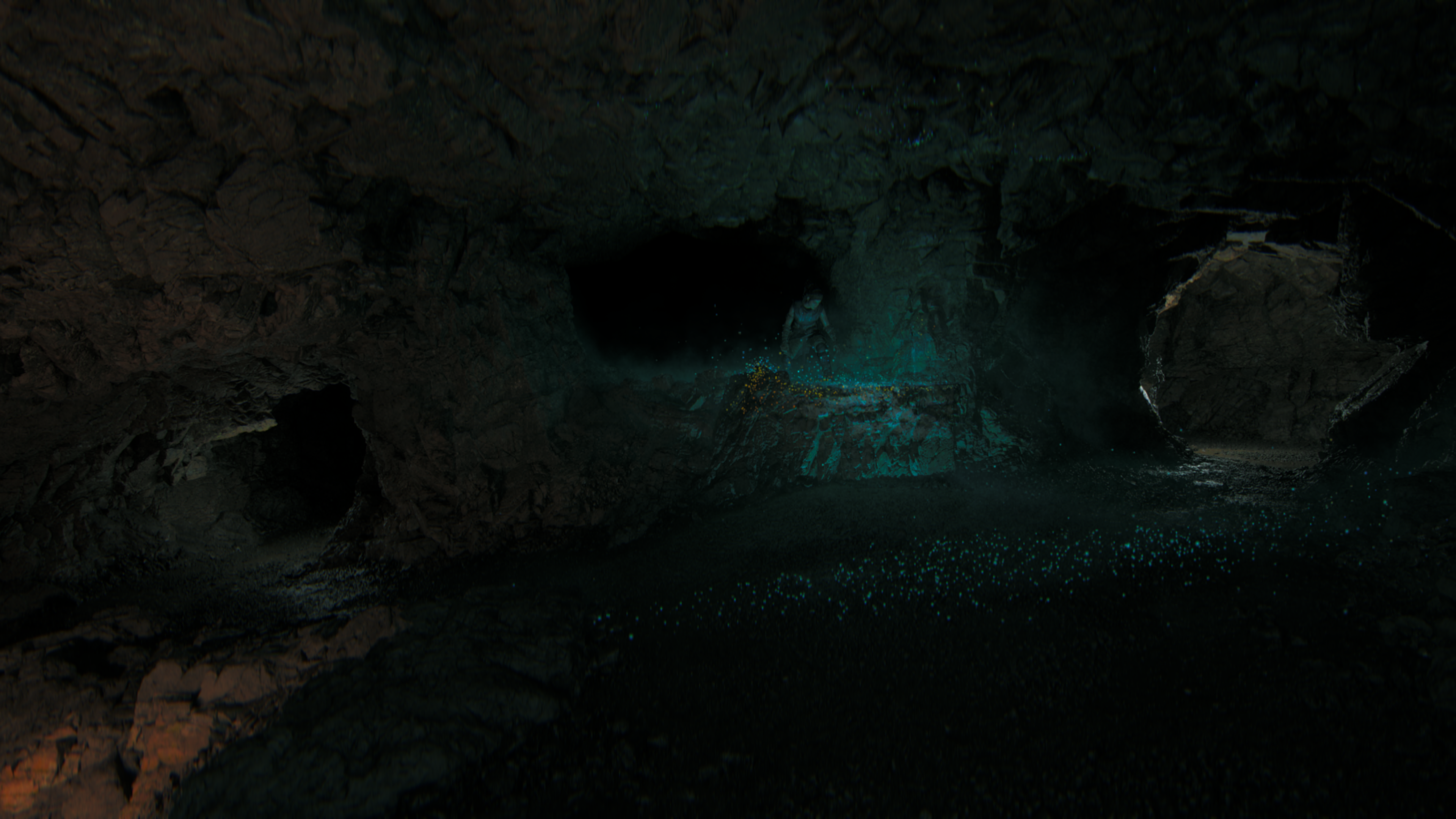
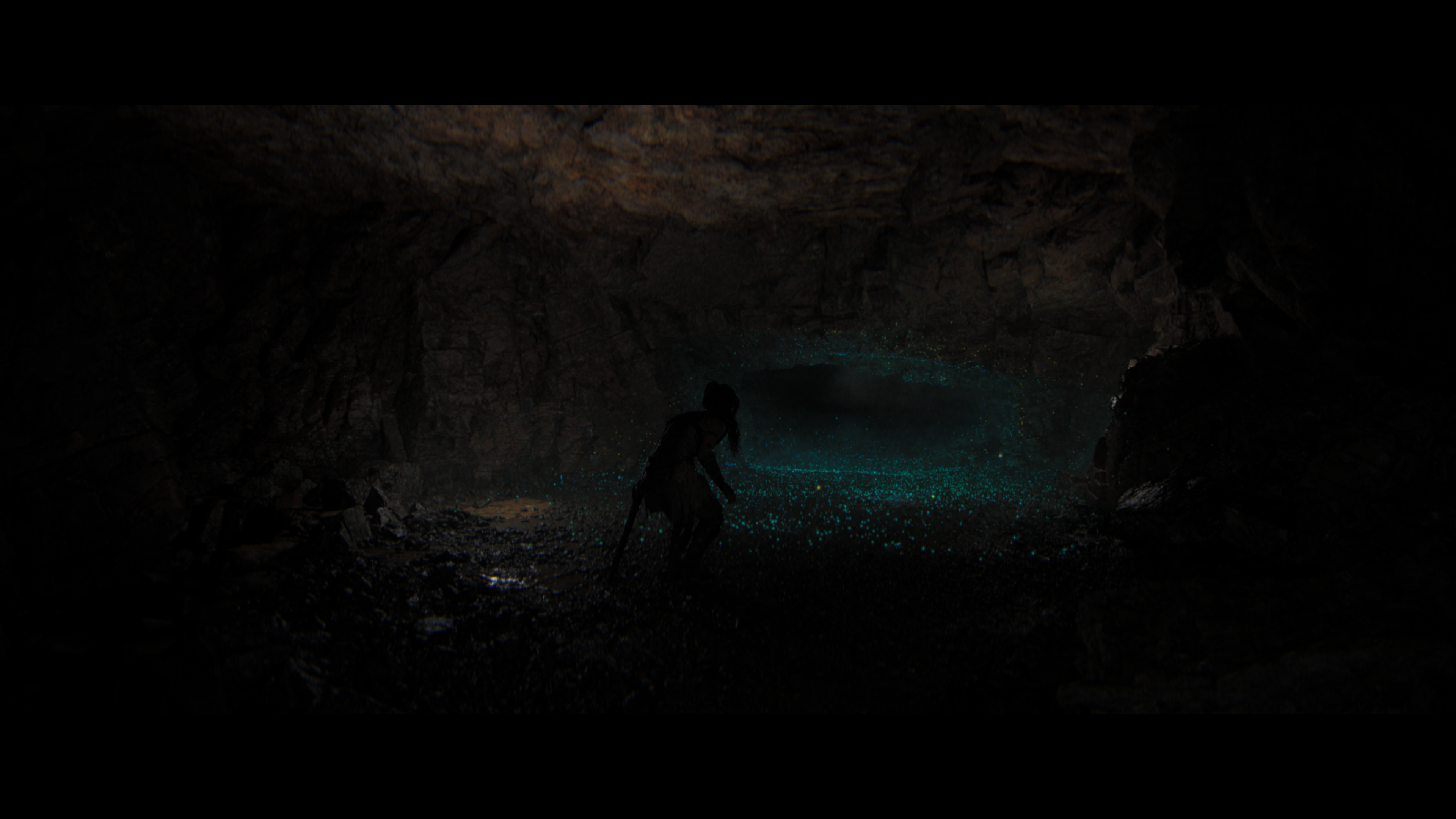
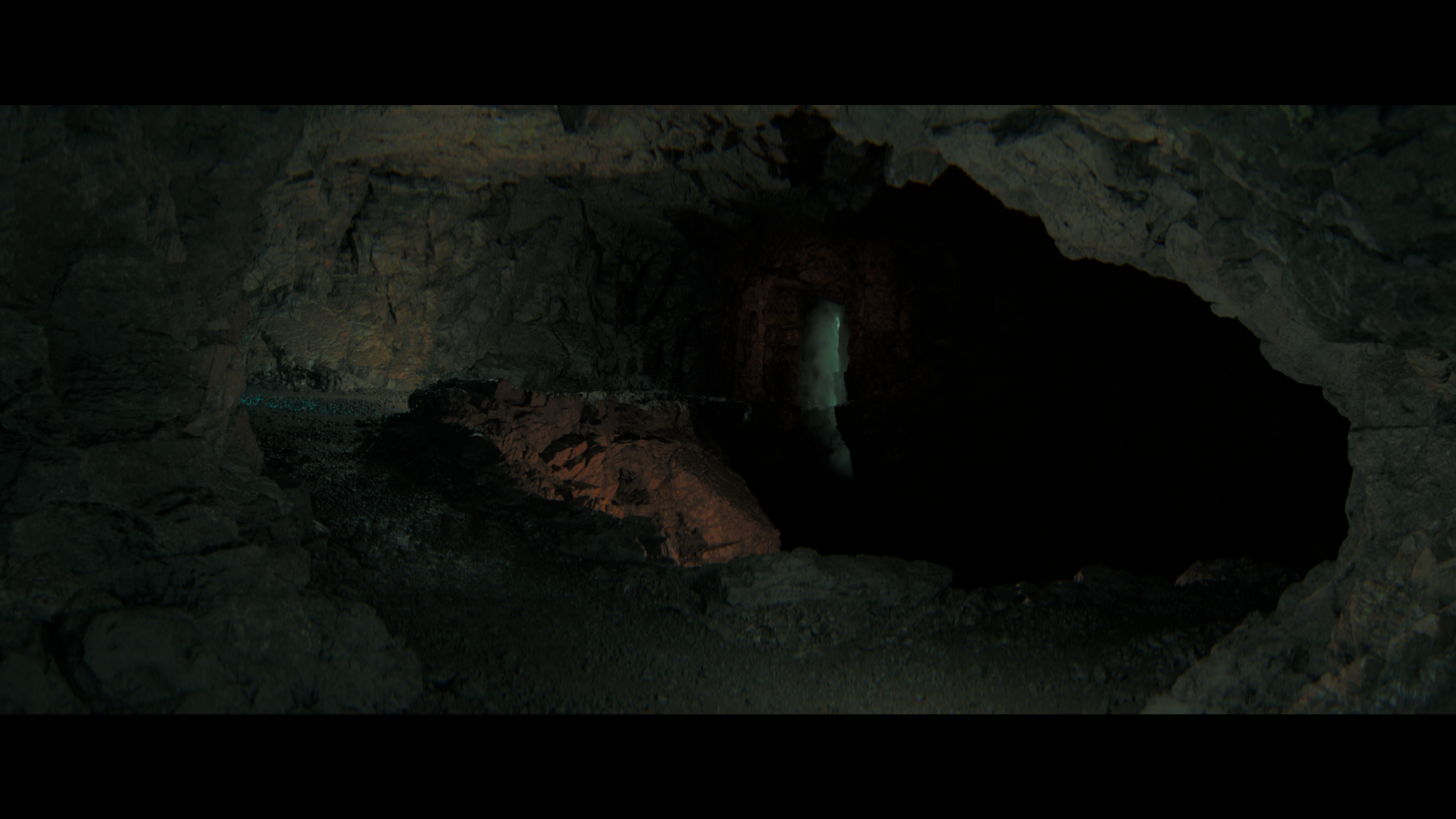
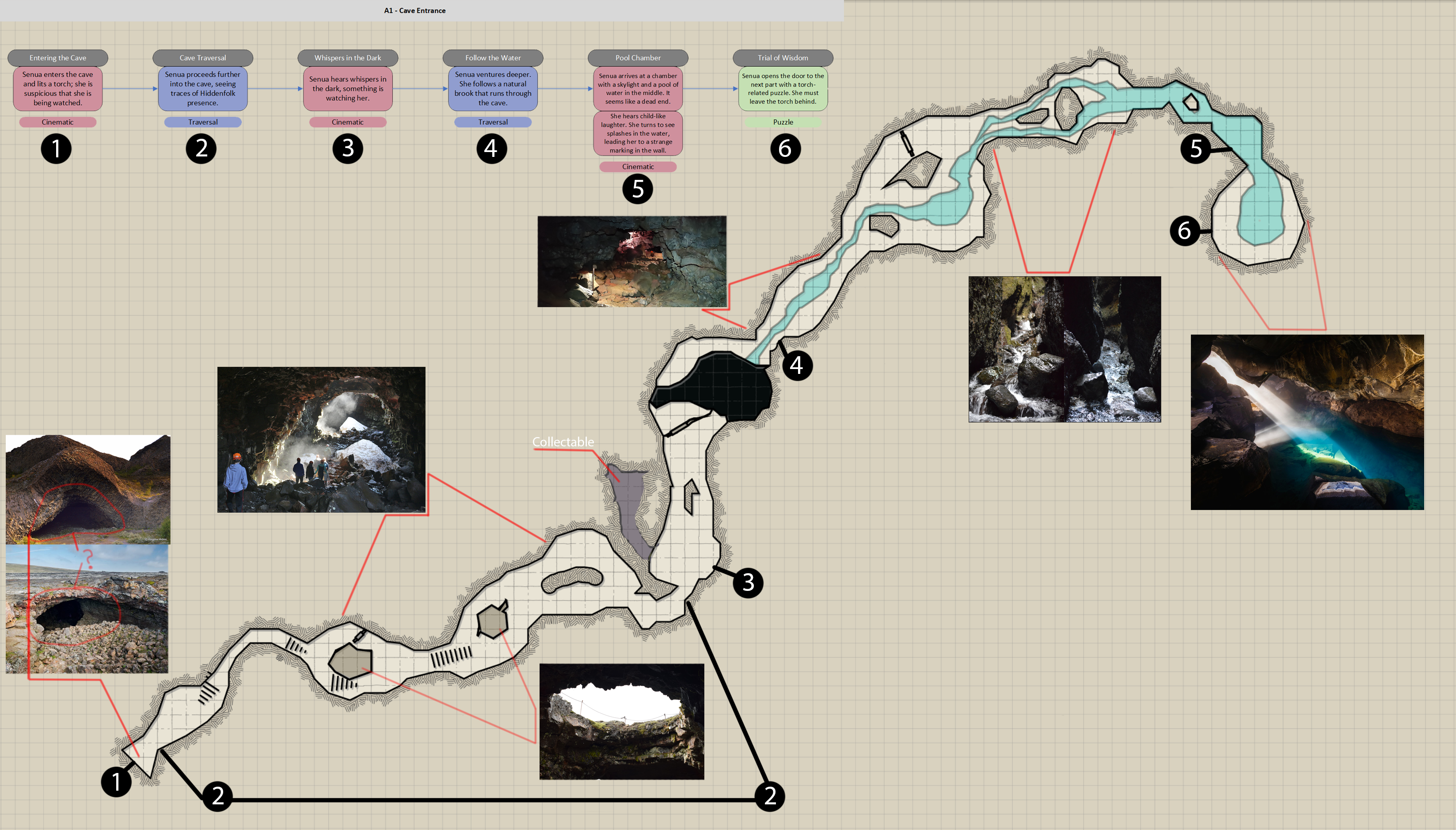
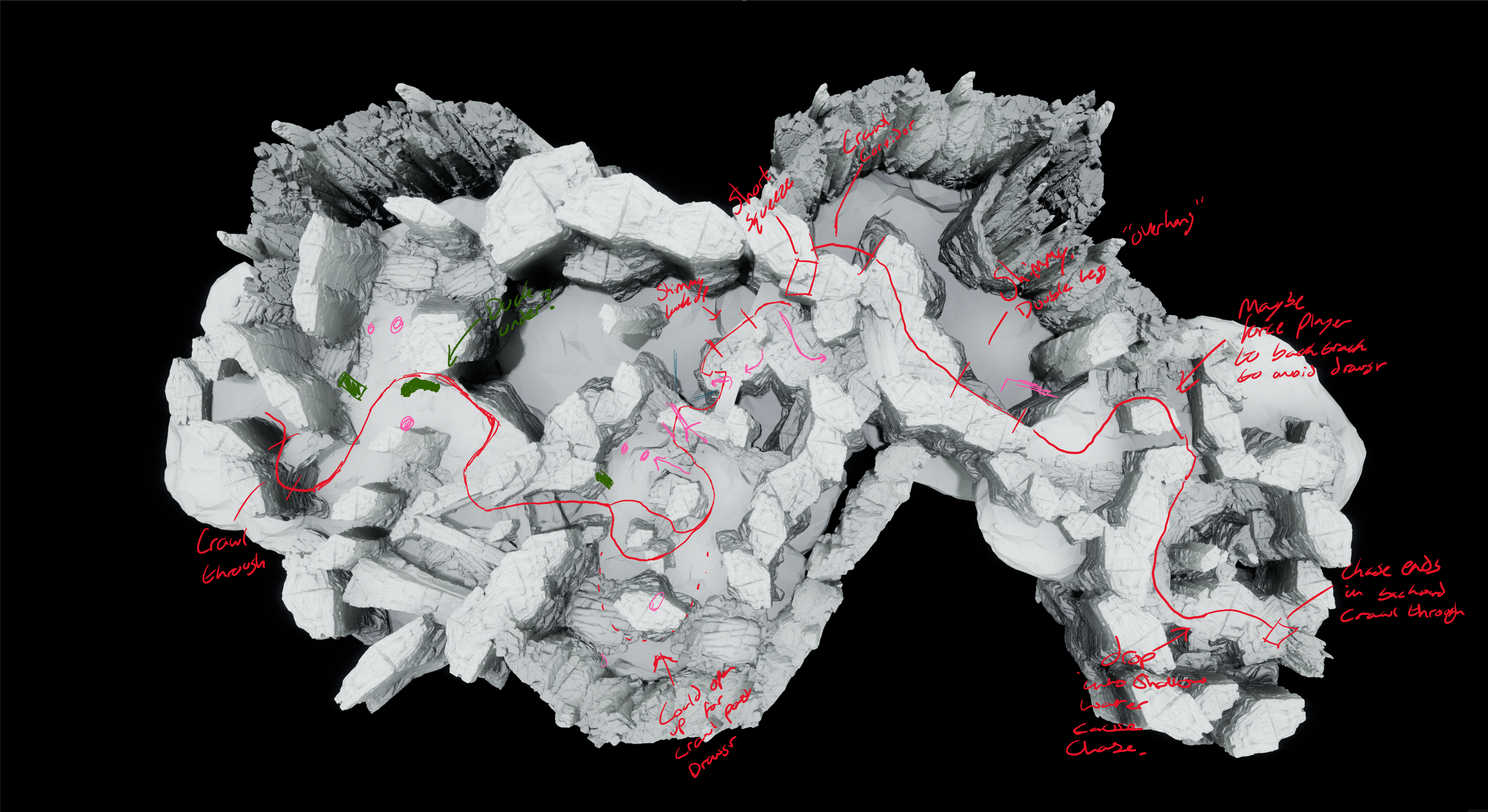
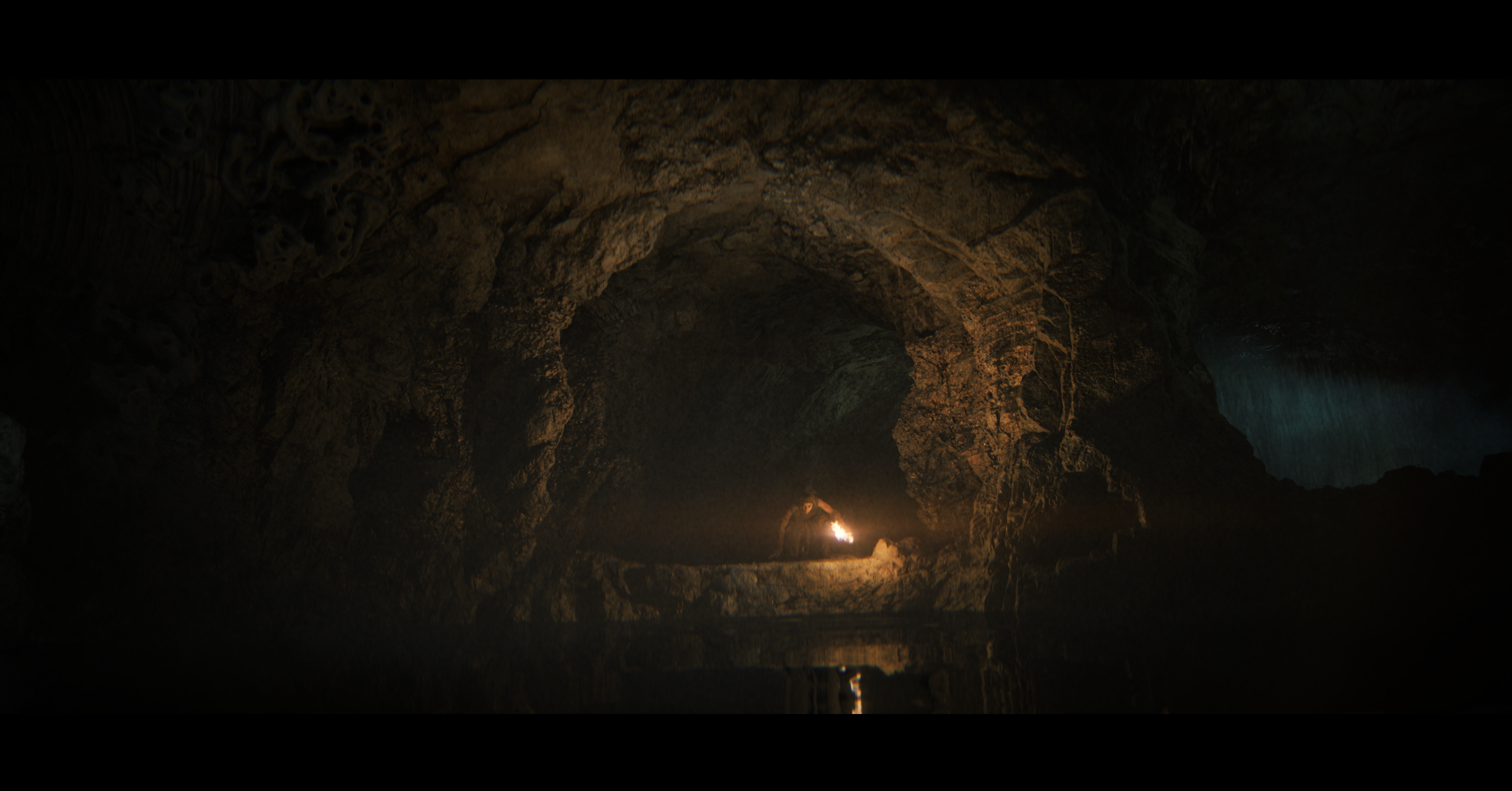
The Hidden Folk caves are one of the few areas in the game not based on a specific real-world location. This gave me greater flexibility with the layout of the level, while still drawing inspiration from real Icelandic lava tunnel formations.
The narrative goal of this section was for Senua to seek out the Hidden Folk in the hope of learning how to defeat Illtauga. In the initial version I designed, the player follows subtle environmental cues left by the Hidden Folk, leading them deeper into the caves. This was supported by a puzzle concept built around shadow manipulation, reinforcing the theme of perception and hidden paths within the environment.
Initial Layout


Additional Support
Alongside these key areas I also assisted with:
- Design specification for the Photomode
- NPC "Walk n Talk" set ups
- Implementation of subtitles and closed captions
- Collision, Navigation & Optimisations
Level Design - Ninja Theory
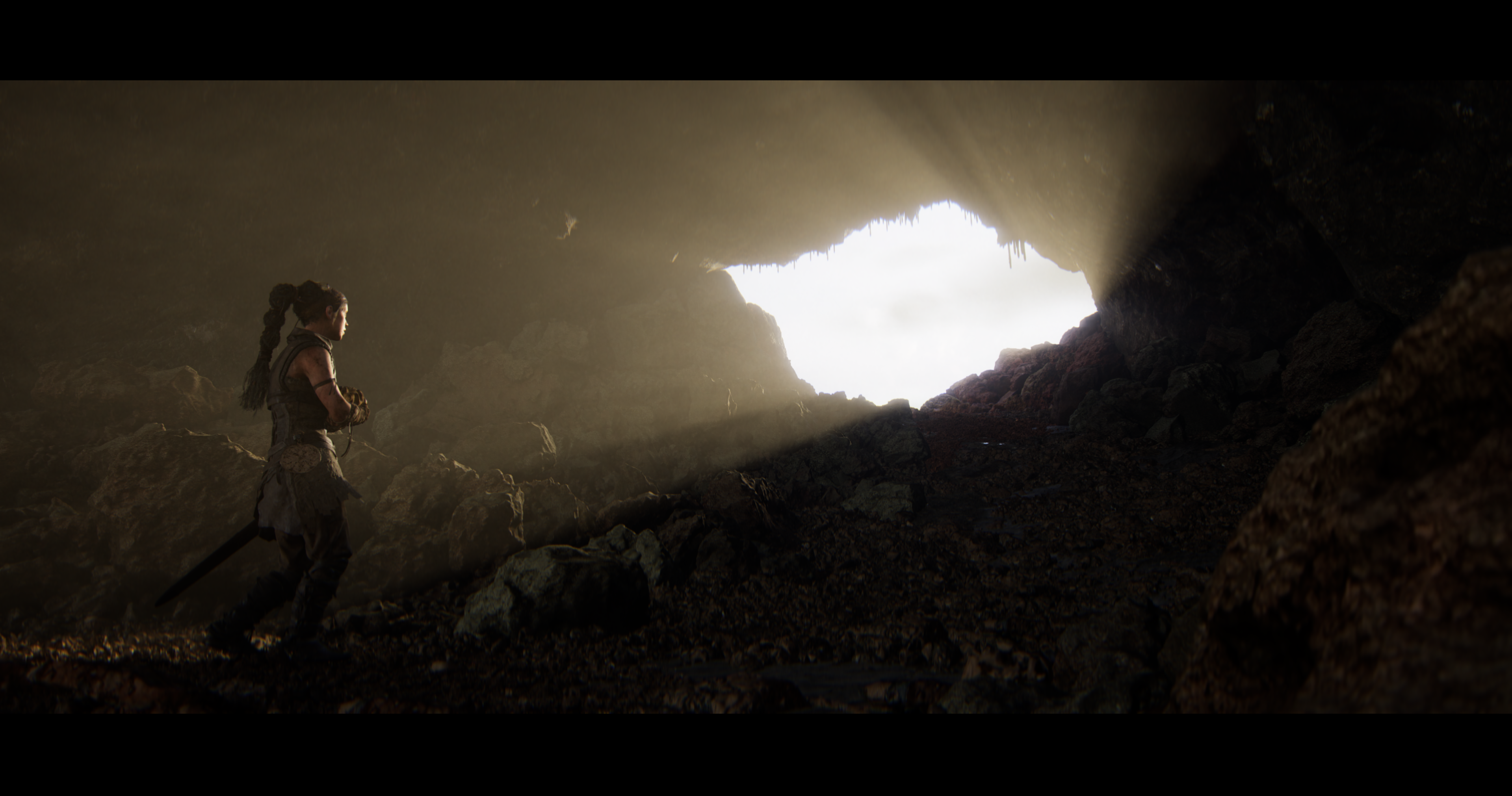
It was an incredible experience working with such talented people at Ninja Theory. I'm extremely proud to have had such a hands on role during the development of Senua's Saga: Hellblade II and we even won a Bafta for Technical Achievement!
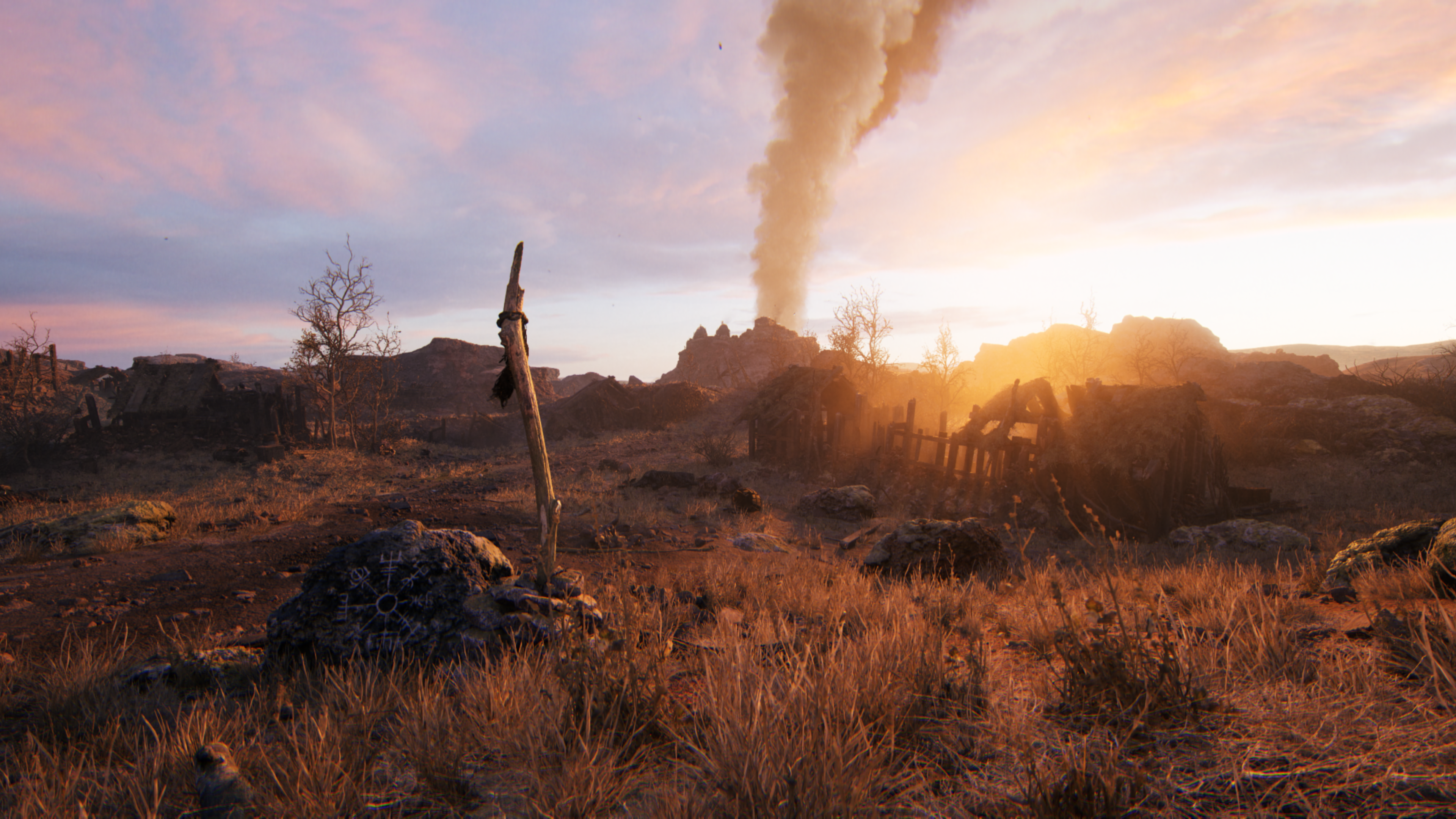
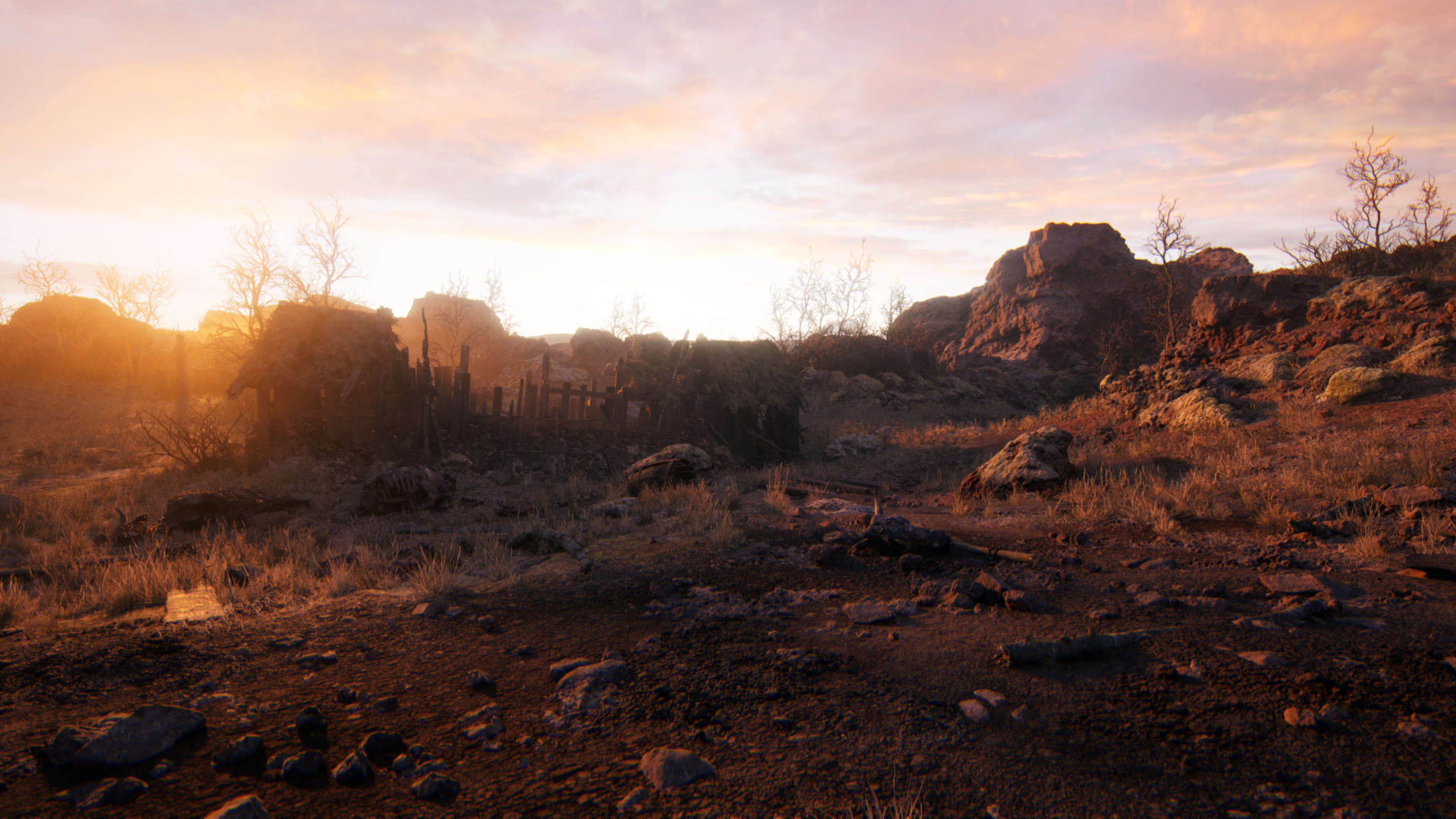
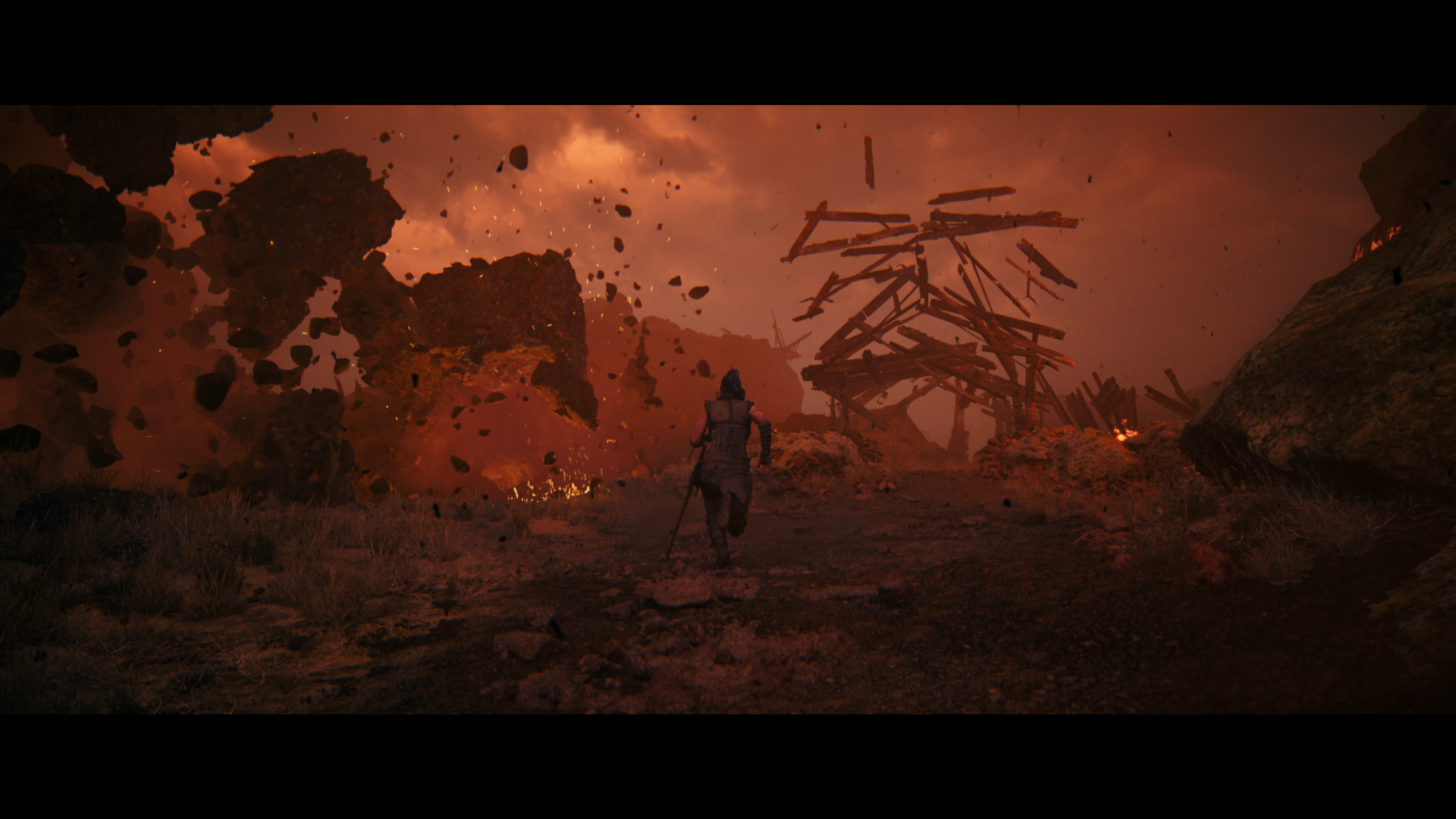
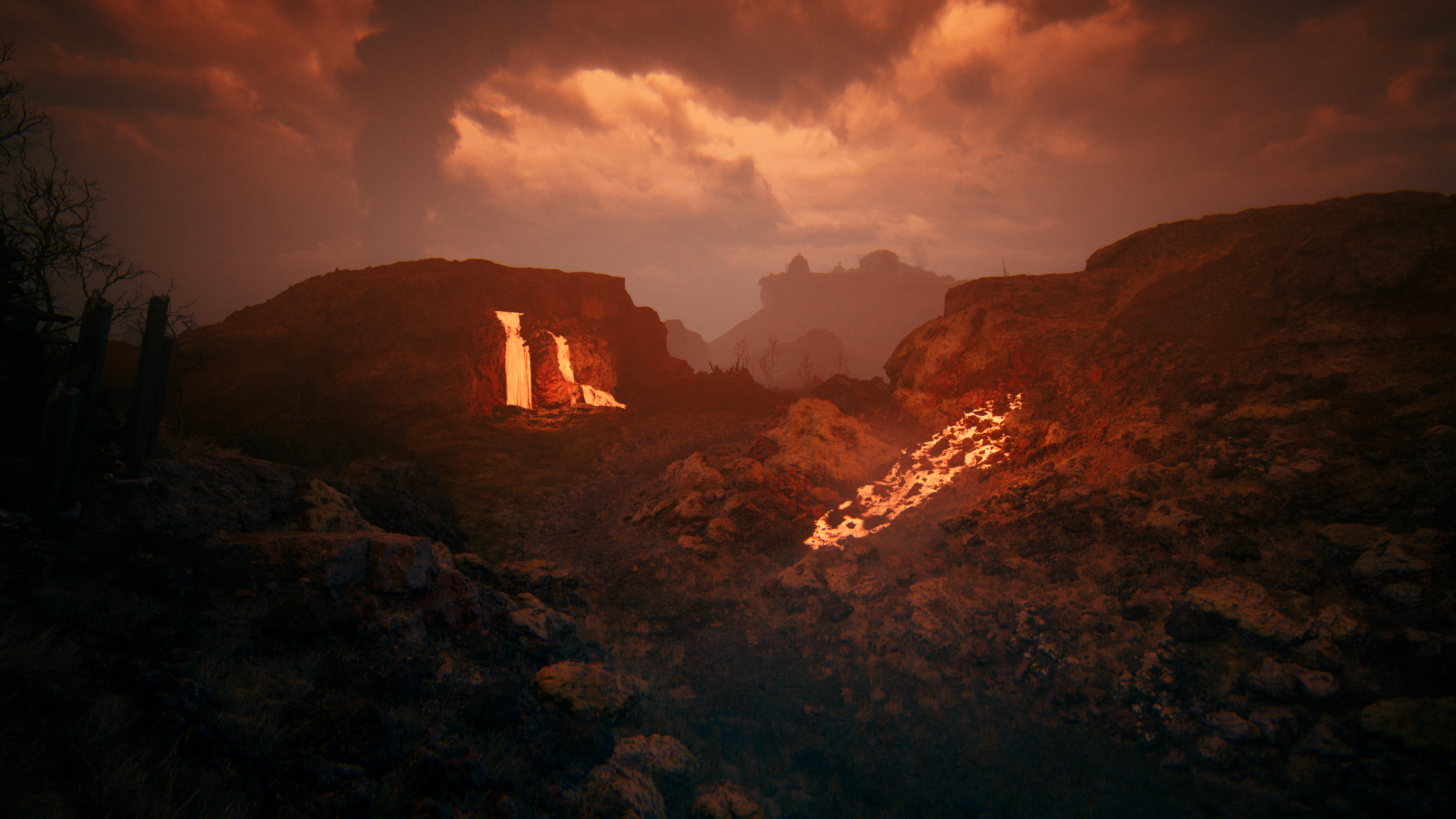
Photomode Captures